Research
Missouri S&T researchers introduce new potential for semiconductors from a naturally occurring mineral
Researchers at Missouri S&T are demonstrating a new two-dimensional material heterostructure – a basic building block for advanced semiconductor devices – that has great potential for future applications in compact sensors and detectors, optical communication, optical integrated circuits and quantum computers.
Read More »

A transformative gift for S&T has worldwide benefits
In October 2020, June and the late Fred Kummer gave a jaw-dropping $300 million to Missouri S&T – the largest gift ever to a public university in our state and one of the largest university gifts in history. The Kummer Institute Foundation will channel the gift into several new buildings and labs, greater community outreach, and new initiatives at Missouri S&T.
Read More »
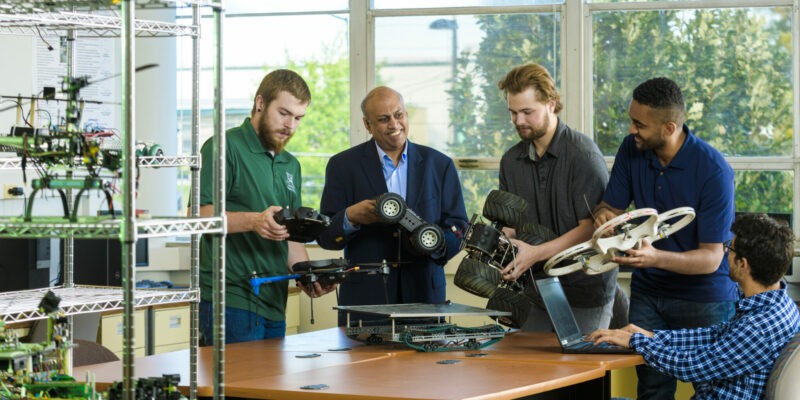
Missouri S&T research gives ‘brain’ to military robots
Robots are widely used in commercial applications and military and police operations around the world, but they lack visual perception and threat-recognition because they often operate solely on location sensors. Researchers at Missouri University of Science and Technology are using deep learning – a type of machine learning – to develop “leader-follower” robot swarms equipped with cameras that will allow them to visually perceive and learn, recognize threats and analyze options to keep humans safe from harm.
Read More »

Grinding jungle combat highlighted in new World War II book
From the highest-ranking generals to the lowest-ranking foot soldiers, U.S. Army soldiers’ perspectives of war in the Pacific theater during World War II are shared in the latest book by military historian Dr. John McManus.
Read More »S&T researcher highlights the first Black newspaperman in America
A Missouri S&T history professor has recently made new discoveries about the life and work of America’s first Black newspaperman.
Read More »
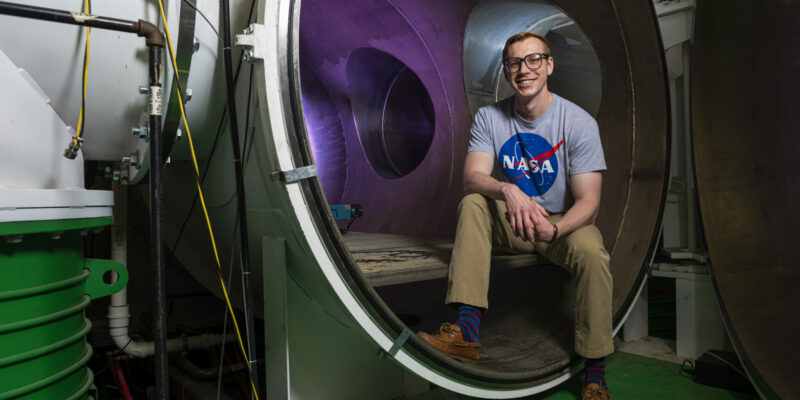
Missouri S&T Ph.D. student receives NASA graduate research award
When NASA sends humans to the moon for the first time in nearly 50 years as part of its Artemis Exploration Program, research conducted by Missouri S&T Ph.D. student David Lund will help crew members understand the ways plasma and lunar surface dust interact.
Read More »
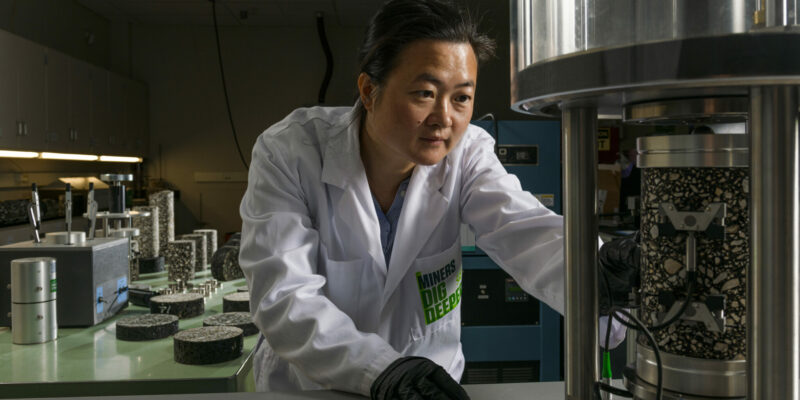
S&T contributes to infrastructure durability and lifespan through national center
As America’s infrastructure ages and climate change takes a toll on highways, railroads and bridges, Missouri S&T is researching stronger, longer-lasting materials and innovative technologies as a member of the only national university transportation center focused on improving the durability and extending the lifespan of infrastructure.
Read More »
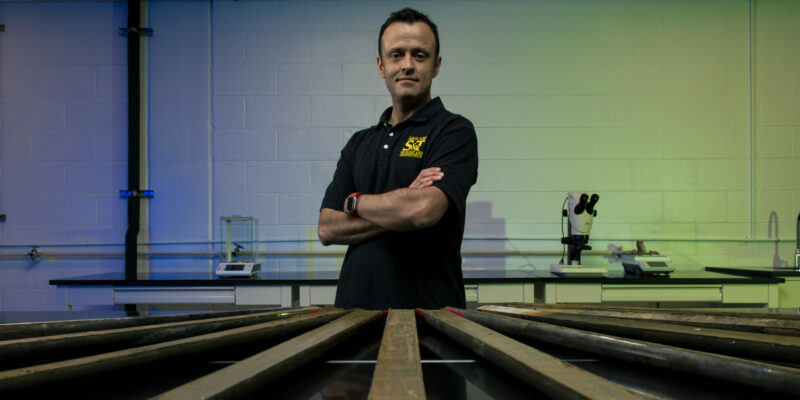
S&T researchers use historical sea-level rise to estimate effects of ice-dam collapse
How widespread will the effects be as polar ice caps melt in a warming climate and release fresh water into our oceans? An international research group led by Missouri S&T researchers may have found some answers after investigating a lake on the Caribbean coast of Guatemala.
Read More »
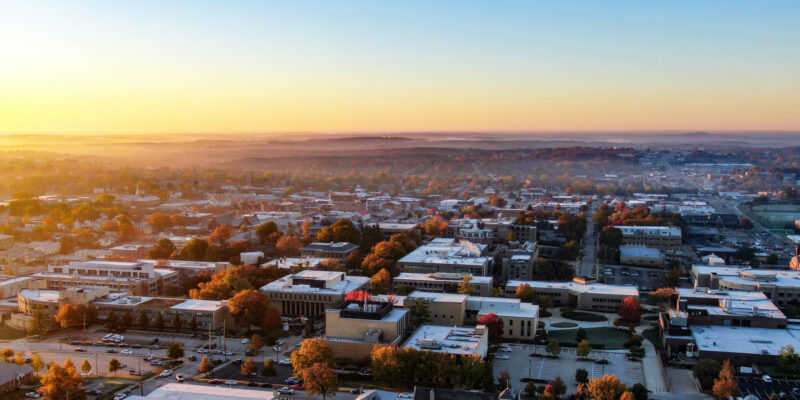
$423 million in gifts and record fundraising year conclude S&T’s Rolla Rising campaign
A multiyear fundraising initiative, Rolla Rising: The Campaign for Missouri University of Science and Technology, began in 2016 with a $150 million funding goal and ended June 30, 2021, with a record-breaking $423.4 million in gifts, Joan Nesbitt, vice chancellor of University Advancement at Missouri S&T, announced today (Thursday, Sept. 30).
Read More »Missouri S&T researchers work to extract pollutants from water
t is an uphill battle to extract pollutants such as heavy metals, hydrocarbons, and radioactive metals from industrial waste and water run-off. Researchers typically focus on cleaning and purifying wastewater to prevent those pollutants from entering the environment and damaging ecosystems. But a team of researchers from Missouri S&T have devised a way to not only clean up heavy metals from the wastewater, but also facilitate recycling the chemicals used and reusing the metals that are extracted.
Read More » Sports Headlines
- Golf Starts Three-Day Tournament at Ken Partridge Invitational Tomorrow
- Baseball Extends Streak to 15; Three Miners Eclipse 100 Hits
- Edmonds and Sallade Record Milestones as Miners Win 7th Straight
- Volleyball Extends Streak to Six; Improves to 7-2 in GLVC
- Baseball Racks Up 25 Hits in Doubleheader Victory Over SBU; Win Streak Now at 14