Science & Tech
Researchers discover new accuracies in cancer-fighting, nano drug delivery
A promising discovery for advanced cancer therapy reveals that the efficiency of drug delivery in DNA nanostructures depends on their shapes, say researchers at Missouri University of Science and Technology and the University of Kansas in a scientific paper published today (March 21, 2018).
Read More »

Missouri S&T fetal heart rate research uses big data to reduce childbirth risks
Giving birth to a child can be described as a sacred, spiritual and life-changing experience. It can also be fraught with pain, fear, complications and injury to both child and mother. For Dr. Steve Corns, associate professor of engineering management and systems engineering, the key to removing some of the uncertainty associated with giving birth may lie not with woman or man, but with machine — machine learning, to be precise.
Read More »
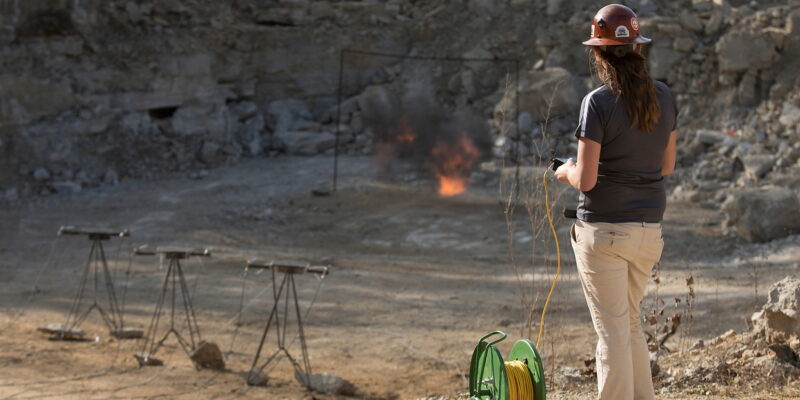
Missouri S&T explosives researcher studies blast-induced brain injuries
The Experimental Mine at Missouri S&T is known to many as the site of a popular summer Explosives Camp for high school students, and for its designation by Popular Science magazine as the country’s “coolest lab.” For Dr. Catherine Johnson, assistant professor of explosives engineering, the Missouri S&T mine is also an invaluable testing ground to study a life-altering ailment that can impact athletes, car accident victims, members of the military and others: traumatic brain injury (TBI). In partnership with neuroscientists from the University of Missouri-Columbia, and researchers with the U.S. Department of Veterans Affairs, the native Briton uses the outdoor lab to mimic battlefield conditions and explore how carefully calibrated explosions affect the brain’s wiring.
Read More »Missouri S&T to participate in $9.7M oil, gas exploration project in southeastern U.S.
A Missouri S&T geologist is part of a four-campus research team that will receive nearly $10 million from the U.S. Department of Energy and several energy companies in a bid to boost unconventional oil and gas recovery in the interior southeastern United States. The project is part of a $30 million investment by the federal agency’s Office of Fossil Energy to boost production in reservoirs with less than 50,000 barrels per day of current production.
Read More »
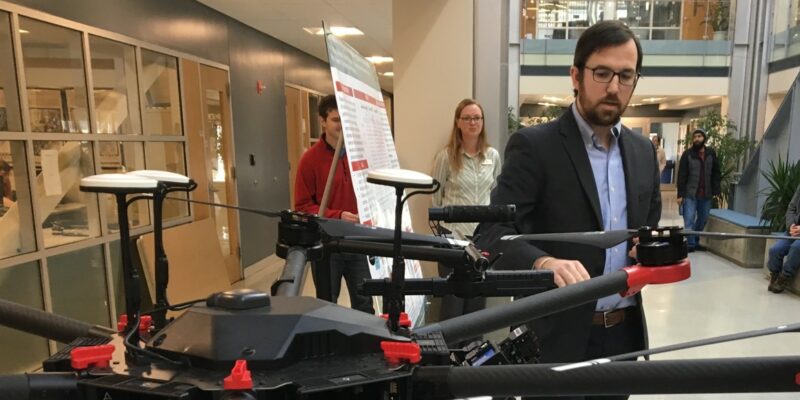
Missouri S&T doctoral student enlists drones to detect unexploded landmines through changes in plant health
From U.S. Navy laboratories to battlefields in Afghanistan, researchers are lining up to explore the use of unmanned aerial vehicles to detect unexploded landmines. At Missouri University of Science and Technology, civil engineering doctoral student Paul Manley is enlisting a third variable —plant health — to see if drones can be used to more safely […]
Read More »
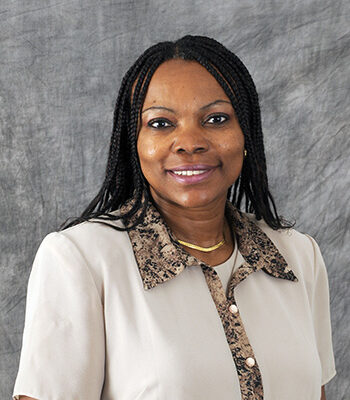
Missouri S&T geologist named AAAS Fellow
Dr. Francisca Oboh-Ikuenobe of Missouri University of Science and Technology has been named a fellow of the American Association for the Advancement of Science (AAAS) for her contributions to the advancement of palynology ─ the study of organic-walled microfossils such as pollen and spores ─ and her outstanding efforts in educating the next generation of Earth scientists. This year’s nearly 400 AAAS fellows will be formally announced in the AAAS News & Notes section of the journal Science on November 24. New fellows will be also be recognized during the organization’s 2018 annual meeting in Austin, Texas, in February.
Read More »

Missouri S&T students clean up water through plant biology
By designing a new protein for a common plant, Missouri University of Science and Technology students can identify contaminated groundwater in the environment and assure homeowners that their drinking water is clean from pollutants like industrial solvents.
Read More »
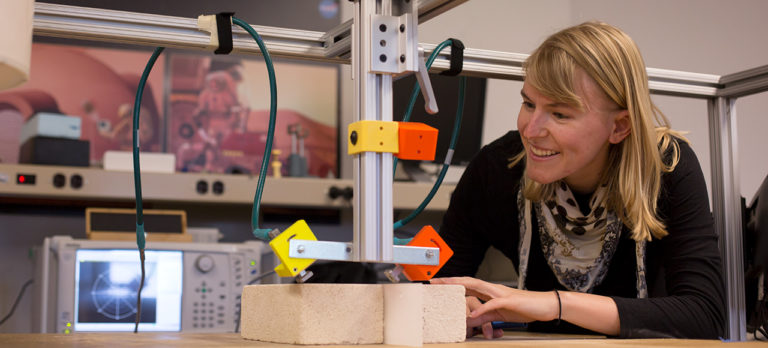
Missouri S&T graduate student awarded top IEEE honor
A Missouri University of Science and Technology graduate student has received a top award from a leading academic honor society for engineers. Katelyn Brinker of Highland, Illinois, is co-winner of the 2017 Alton B. Zerby and Carl T. Koerner Outstanding Student Award from IEEE-Eta Kappa Nu (HKN). The honor society for electrical and computer engineers is an affiliate of the Institute of Electrical and Electronics Engineers (IEEE), the world’s largest technical professional organization for the advancement of technology.
Read More »
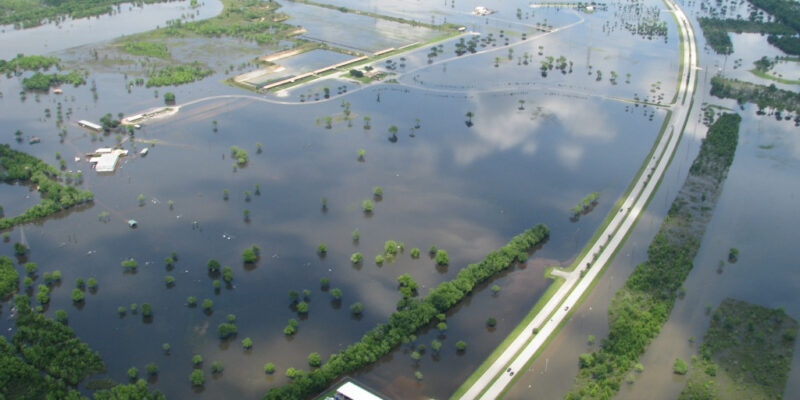
Missouri S&T receives federal support for early-stage research into tapping “citizen scientists” to collect water quality data
Picture teams of smartphone-toting citizen scientists, poised to collect water samples and test for contaminants thanks to a user-friendly app that can crowdsource rapid responders to mobilize the next time a public water system is at risk.
Researchers from Missouri University of Science and Technology and the University of South Florida are tapping National Science Foundation seed money set aside for “potentially transformative research” to advance the technology and hone the social mobilization efforts needed to summon trained, trusted teams of everyday water watchers.
 Sports Headlines
- Baseball Completes Sweep of UIS with Pair of Walk Off Wins in Extras; Win Streak Increases to 19
- Miners Sweep Lewis Behind LaChappell’s Two-Triple, Four-RBI Game
- Baseball Sweeps UIS in Saturday DH to Claim Top Spot in GLVC
- Volleyball Downs the Hawks in Four, Extends Win Streak to Nine
- Softball Drops Pair of One-Run Games at No. 7 UIndy; Miller Hits 200 Career Strikeouts