News

Missouri S&T developing first user-friendly software platform to update dynamic networks
Researchers at Missouri S&T are developing a new approach for updating dynamic networks – like those used to track viruses, connect people on social media and coordinate transportation systems – that they say is the first scalable, expandable and user-friendly solution to analyze who is using the network, where they are, and what information and […]
Read More »
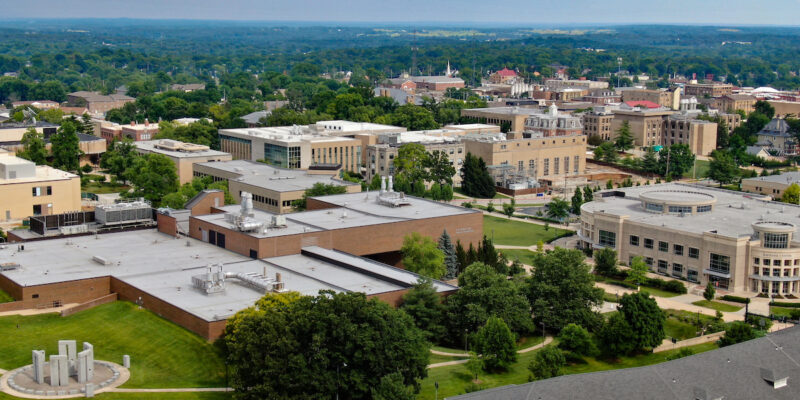
Missouri S&T best in state for value, starting salaries, report shows
A new report from the financial technology firm SmartAsset ranks Missouri S&T as the best value among Missouri universities and best in the state when it comes to graduates’ average starting salaries. The average starting salary of $69,200 for Missouri S&T graduates was the highest of all universities in the state, according to the report. […]
Read More »

Missouri S&T offers resume guidance to community members
Even amid talk of a labor shortage, employers are still paying close attention to job applicants’ resumes in their search for the most qualified candidates for their open positions. The career advisors at Missouri University of Science and Technology will help community members polish their resumes through an upcoming “Resume Blitz.” During the Resume Blitz, […]
Read More »
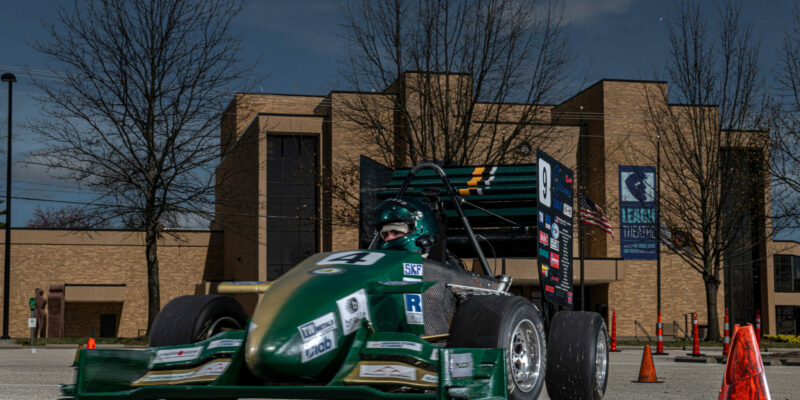
Innovation doesn’t take the summer off
Most S&T students take a well-earned break in the summer, but the quiet on campus is still occasionally disrupted by the roar of a rocket launch or the rumble of a racecar engine coming from the Student Design and Experiential Learning Center.
Read More »

Missouri S&T plans new degree in environmental science
To meet the growing demand and interest in environmental sustainability, Missouri S&T plans to add a new bachelor’s degree in environmental science.
Read More »
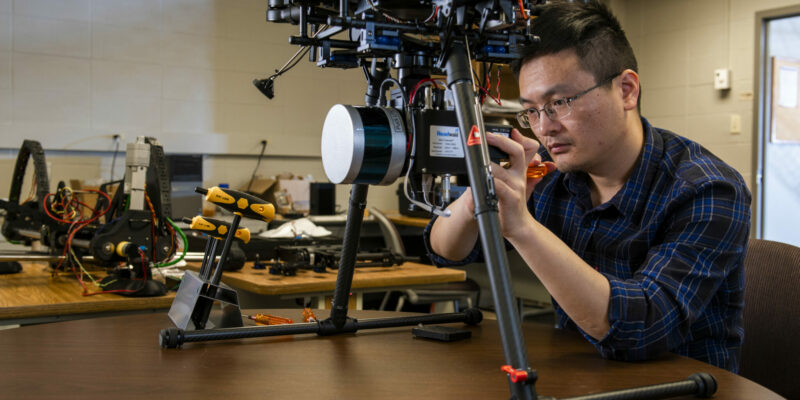
Missouri S&T Ph.D. candidate wins $70,000 Laegeler Fellowship for renewable energy research
Research involving drones mounted with thermal and hyperspectral cameras to inspect solar panels for damage has won a $70,000 fellowship for Xinzhe Yuan, who will complete his Ph.D. at Missouri University of Science and Technology later this year. The Laegeler Sustainable Energy Fellowship – from Concept to Reality, created by two Missouri S&T graduates, will provide a stipend and benefits for Yuan to conduct postdoctoral research at S&T.
Read More »Alysha M. O’Neil named chief financial officer at Missouri S&T
Alysha M. O’Neil, director of project implementation and engagement for the Division of Finance and chief business officer for the chancellor’s office at the University of Missouri-Columbia, has been named vice chancellor for finance and operations at Missouri University of Science and Technology. She starts on July 1. O’Neil succeeds Cuba Plain, who retired on […]
Read More »
Summer classes begin at Missouri S&T
At the close of registration on Monday, June 7, 2,043 students were enrolled at Missouri University of Science and Technology in one of the university’s four summer sessions. Missouri S&T’s four summer learning sessions include a blend of in-person, online and hybrid instruction. An eight-week session and the first of three four-week sessions began Monday, […]
Read More »

How to be an ally
More than 50 years ago, a tragedy at the Stonewall Inn in New York City galvanized a movement to seek full equality for members of the LGBTQ+ community.
Read More »
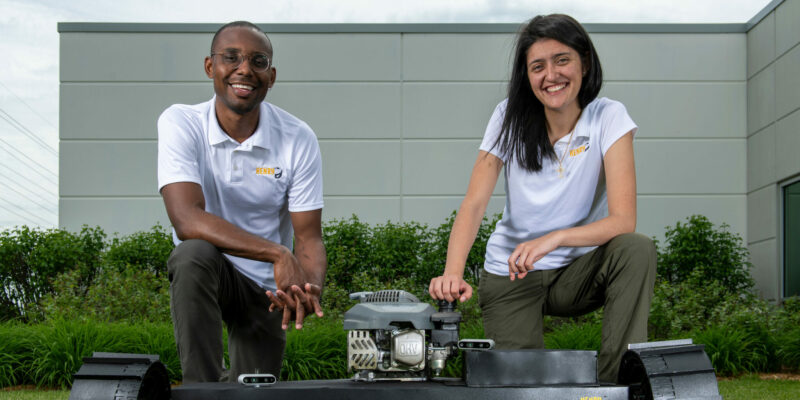
Changing the landscape
Using robotics and artificial intelligence, alumni entrepreneurs set out to transform the lawn care industry Mowing neighborhood lawns is a common summertime ritual for teens looking to earn some money. George Leno Holmes Jr. was one of those teens. The two-time Missouri S&T mechanical engineering graduate spent many St. Louis summer days mowing with his […]
Read More »