Department of Biological Sciences
Missouri S&T research center open for business
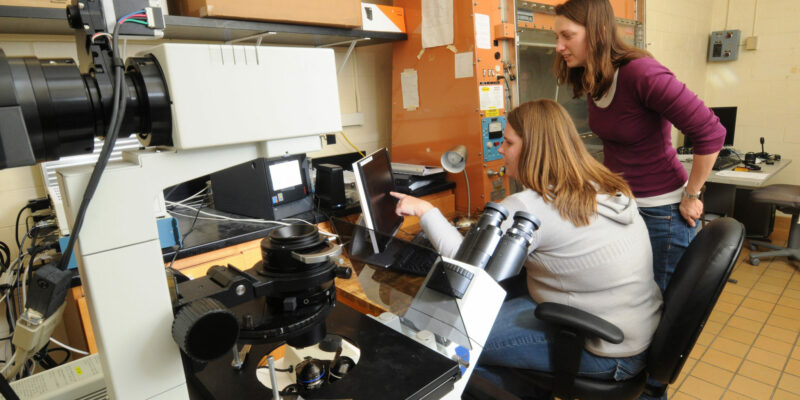
The Center for Statistical and Computational Modeling of Biological Complexity at Missouri University of Science and Technology is open for business and seeking faculty researchers to join its mission of shared discovery.
Read More »

Mormile named to new position
Dr. Melanie Mormile, professor of biological sciences at Missouri University of Science and Technology, was named special assistant to the provost for faculty affairs effective Feb. 9.
Read More »
University center using flies to unlock Alzheimer’s sleep secrets
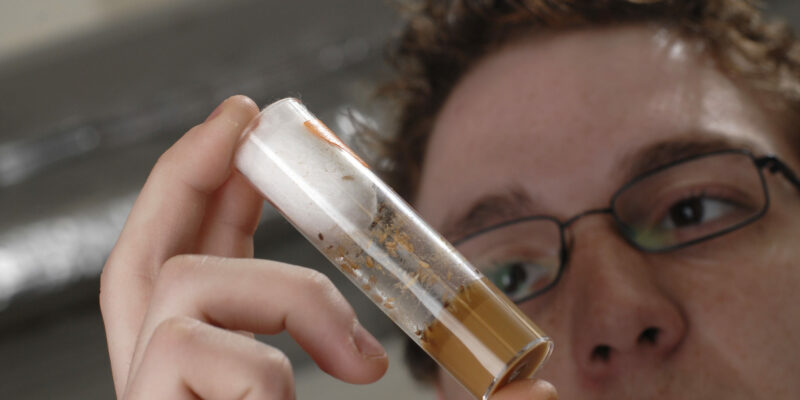
Researchers in Missouri University of Science and Technology’s Center for Statistical and Computational Modeling of Biological Complexity are using fruit flies to help unlock some of the secrets surrounding sleep and Alzheimer’s disease.
Read More »

Missouri S&T pilots online laboratory course this semester
This spring, Missouri University of Science and Technology is offering its first fully online section of a biology laboratory class using an at-home lab kit. Students can perform “wet” laboratory experiments, hands-on chemical-based work, in open-air areas and follow provided instructions for biological course work.
Read More »

S&T researcher finds hydrogen production in extreme bacterium
A researcher at Missouri University of Science and Technology has discovered a bacterium that can produce hydrogen, an element that one day could lessen the world’s dependence on oil.
Read More »
Missouri S&T to offer biomedical engineering minor degree program in fall 2015
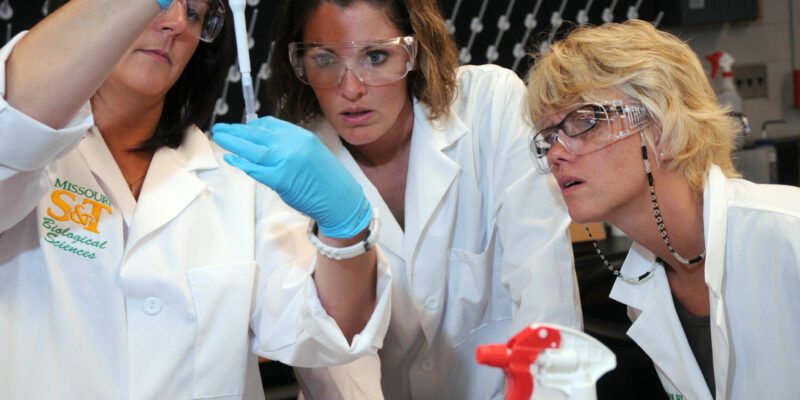
A new biomedical engineering minor at Missouri University of Science and Technology will allow students to blend traditional engineering techniques with biological sciences and medicine to improve the quality of human health.
Read More »
Missouri S&T student team cleans up coal
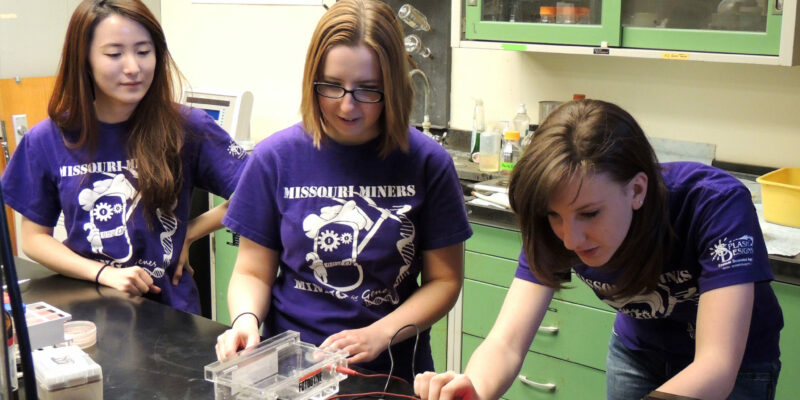
Burning coal gases may one day stop releasing nitrogen oxides into the atmosphere and instead produce essential fertilizer components thanks to research by a team of students from Missouri University of Science and Technology.
Read More »Missouri S&T students to host Fitness Fun Day for area kids
A group of biological sciences seniors at Missouri University of Science and Technology will host Fitness Fun Day to offer area children an opportunity to get active and learn about the importance of nutrition and exercise.
Read More »S&T College of Arts, Sciences, and Business to host open house
The College of Arts, Sciences, and Business at Missouri University of Science and Technology is hosting an open house for prospective students and their families.
Read More »

Reinventing biology lab with $10 and a smartphone
With nothing more than a smartphone and less than $10 of trinkets and hardware supplies, students at Missouri University of Science and Technology can build their own microscopes this fall as part of a biology lab.
Read More » Sports Headlines
- Missouri S&T Football Places Fourth in GLVC Preseason Poll
- Wells and Bradley Jr. Set to Represent S&T at Annual GLVC Football Kickoff Tomorrow
- S&T's Owen Fraser Named Academic All-America of the Year for NCAA Division II
- Missouri S&T Athletics Partners with vivenu for New Digital Ticketing Platform
- 2026 Miner Athletic Hall of Fame Induction Class Announced