Science & Tech

Physicist works to explain atom motion
By laser-cooling atoms and studying their movements, a Missouri University of Science and Technology researcher hopes to better understand how atoms and their components are affected and directed by environmental factors.
Read More »

Missouri S&T researcher tracks subsurface water flow
By combining computational mathematics and several engineering disciplines, a Missouri University of Science and Technology researcher hopes to consistently predict the underground flow of water through porous terrain with large fractures, channels or conduits.
Read More »Missouri S&T team boosts lithium-ion battery performance
ROLLA, Mo. — Batteries are everyday objects people don’t think about — until they run out of juice. That’s especially true the more ubiquitous an object is, such as laptop computers and cellphones that need to have their batteries charged seemingly every day.
But Missouri University of Science and Technology researchers are working to solve the problem of short-life of lithium-ion batteries like those used in laptops and cellphones, making them reliable and longer-lasting using a thin-film coating technique called atomic layer deposition (ALD). Their paper, titled “Employing Synergetic Effect of Doping and Thin-Film Coating to Boost the Performance of Lithium-Ion Battery Cathode Particles,” is being published today, Wednesday, May 4, in Scientific Reports, a Nature publishing group journal.
Read More »Computer modeling helps researcher chase diseases
Researching ways to cure cancer and neurodegenerative diseases in the lab is painstaking, time-consuming and expensive. But a Missouri University of Science and Technology professor is using computer modeling to test drug therapies that one day could lead to cures for these conditions that kill millions each year.
Dr. Dipak Barua, assistant professor of chemical and biochemical engineering at Missouri S&T, is the principal investigator on a project funded with a Department of Energy grant for $112,377 on “countering pathogen interfaces with human defenses.”
“We use math and computational modeling as a tool to understand the mechanisms in cells, and we develop computational and mathematical models that make predictions” about what will happen with different therapies, Barua says.
Read More »

Studying blood for the greater good
Elizabeth Bowles, a Ph.D. student in chemistry at Missouri S&T, has had a rather unconventional goal for the past several years: improve the care of patients with conditions like diabetes or pulmonary arterial hypertension by reducing severe adverse side effects of pharmaceuticals through a new and innovative drug delivery system. Bowles first started tackling her […]
Read More »3-D microwave video camera takes a look inside
Missouri University of Science and Technology researchers have developed a real-time, portable and 3-D microwave video camera prototype.
The Missouri S&T team has developed a microwave 3-D video camera that can be used for industrial inspection applications, security screening — and might even one day be used by first responders. Dr. Mohammad Tayeb Ghasr, assistant research professor at Missouri S&T, and Dr. Reza Zoughi, the Schlumberger Distinguished Professor of Electrical Engineering at Missouri S&T, are the lead researchers on the project.
Read More »Missouri S&T, Honeywell team up in metals research
From hip and knee joints to complex fuel injectors, metal additive manufacturing — an advanced form of 3-D printing involving lasers and powder-based metals — can produce components that traditional machining processes cannot match in time-to-part, geometric complexity and manufacturing cost.
A team of Missouri University of Science and Technology researchers is collaborating with Honeywell Federal Manufacturing & Technologies in Kansas City, Missouri on a five-year project to perform material analysis for the selective laser melting (SLM) process in metal powder bed. Dr. Ming Leu, Keith and Pat Bailey Missouri Distinguished Professor of Integrated Product Manufacturing and the director of the Intelligent Systems Center at Missouri S&T, is leading a team of seven other Missouri S&T professors on the project.
Read More »Missouri S&T professor aims to improve self-consolidating concrete
A Missouri University of Science and Technology researcher is studying how to make concrete that can be placed without a lot of human intervention, and that can be poured in hard-to-reach places where people can’t easily manipulate it.
Dr. Dimitri Feys, assistant professor of civil, architectural and environmental engineering at Missouri S&T, is working with self-consolidating concrete to produce beams that can be used to construct bridges, parking garages or other construction. Self-consolidating concrete is a type that flows easily in concrete forms or molds.
“The main use of this concrete is in Japan and Europe — 100 percent of the pre-cast industry in Denmark uses this type — and it slowly is making its way in the U.S. market,” he says.
But there are challenges, Feys says.
Read More »
S&T and PCRMC to co-host research symposium
Missouri University of Science and Technology and Phelps County Regional Medical Center (PCRMC) are partnering to present a research symposium this month. The symposium is the inaugural event hosted by the Ozark Biomedical Initiative (OBI), a strategic partnership between PCRMC and S&T.
Read More »
S&T technique to detect breast cancer moving from lab to commercialization
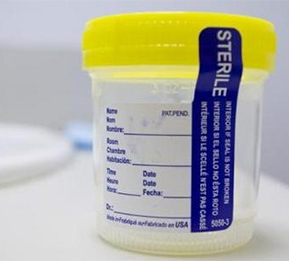
Cancer screening could soon be as simple as giving a urine sample using a patented device developed by a Missouri University of Science and Technology researcher. This week, Wyoming-based Cancer.im Inc., a Viratech Corp. company (Symbol: VIRA) and social network for cancer patients, survivors and caretakers, announced an agreement with Missouri S&T to commercialize the device.
Read More » Sports Headlines
- Miners Open Outdoor Season Strong at Miner Invitational
- Nelson’s Three-Homer Game Powers Miners to Split at UMSL
- Miners Hit Program Record .667 in Dominant Victory on Senior Day
- Meyer Becomes First Miner in 1000 Kills Club; Miners Sweep Jimmies
- Miners Win Third Straight with 9th Inning Comeback vs Truman