Research
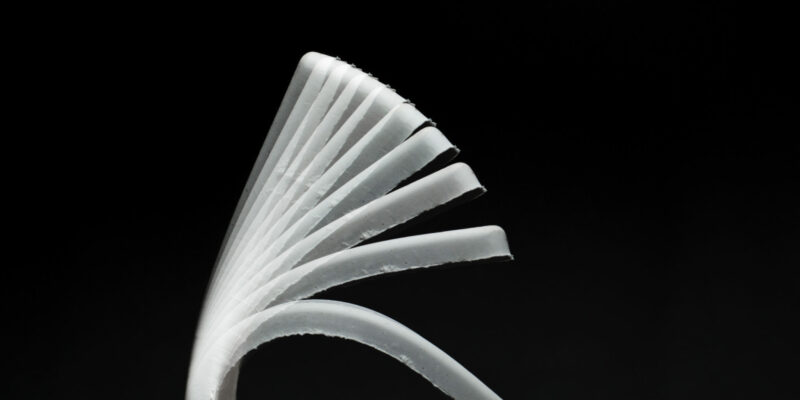
Researchers create shape-memory aerogels with rubber-like elasticity
Polymeric aerogels are nanoporous structures that combine some of the most desirable characteristics of materials such as flexibility and mechanical strength. It is nearly impossible to improve on a substance considered the final frontier in lightweight materials. But chemists from Missouri University of Science and Technology have done just that by making aerogels that have rubber-like elasticity and can “remember” their original shapes.
Read More »History professor publishes sourcebook on Reformation
A Missouri University of Science and Technology history professor recently published a book intended for college-level classes on the Reformation period. Dr. Michael Bruening, associate professor of history and political science at Missouri S&T, edited A Reformation Sourcebook: Documents from an Age of Debate. The University of Toronto Press published the 273-page reader in April […]
Read More »CAREER Award funds research on scaling up metasurface manufacturing
Dr. Edward Kinzel, assistant professor of mechanical and aerospace engineering at Missouri University of Science and Technology, received the National Science Foundation’s Faculty Early Career Development (CAREER) Award for his work on metasurfaces, composite structures whose geometry allows properties to be engineered far beyond natural materials.
Read More »AI and e-commerce: a perfect storm for retail jobs
If you work in retail sales, it might be time to explore a new career, according to a Missouri S&T researcher. Dr. Keng Siau, chair and professor of business and information technology, writes in a new research paper that the problem for retail salespeople is two-fold.
Read More »

S&T physicist improves particle interaction modeling
Quantum electrodynamics is a lot like baking a cake, and then trying to take apart the individual ingredients. At least, that is what physicist Dr. Ulrich Jentschura equates to the process of creating an equation that can couple particles’ and antiparticles’ predicted masses at the same time.
Read More »Fueling space flight
It started with a boyhood dream of becoming an astronaut fueled from watching the 1995 Hollywood portrayal of the ill-fated Apollo 13 lunar mission. It ended – or rather, took a detour – after a teenage growth spurt propelled Steven Berg beyond NASA’s 6-foot-4 height limit for space travelers (the Wentzville, Missouri, native now stands 6-foot-7). The federal agency’s loss is Missouri S&T’s gain, as Berg’s fascination with space led to bachelor’s, master’s and doctoral degrees in aerospace engineering from a campus where he’s now a postdoctoral fellow in the Aerospace Plasma Laboratory under the supervision of associate professor Josh Rovey, his thesis adviser.
Read More »

How World of Warcraft can get you a job
“Stop playing that stupid video game and get a job.” It’s a sentiment expressed by generations of parents since Pong began invading unsuspecting households in 1975. But what if that “stupid game” could help you get a job, and what if that same game could make you a valuable team member once you had the job? […]
Read More »Wound care technology invented at S&T hits marketplace
A glass-based wound care product that emerged from research by a doctoral student at Missouri University of Science and Technology has been approved by the U.S. Food and Drug Administration for human use and is now available on the commercial market. Steve Jung laid the groundwork for the Mirragen Advanced Wound Matrix while earning a master’s degree in ceramic engineering and a Ph.D. in materials science and engineering at Missouri S&T. Jung is now chief technology officer at Mo-Sci Corp., a Rolla specialty glass manufacturer that continued the product’s development in collaboration with ETS Wound Care, also of Rolla.
Read More »Researchers work on carbon dioxide capture systems
A Missouri University of Science and Technology researcher and her team are developing technology that could help keep astronauts safe from carbon dioxide buildup during flight and aboard the International Space Station.
Dr. Fateme Rezaei, assistant professor of chemical and biochemical engineering at Missouri S&T, and the team have developed “robust structures” in mechanically strong configurations that are comparable to powders in adsorbing CO2. Their findings were reported in the American Chemical Society’s Applied Materials & Interfaces publications in September 2016 and February 2017.
Read More »
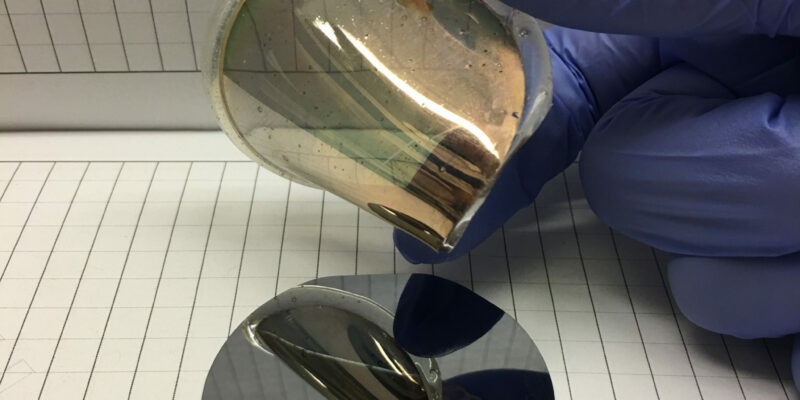
Research leads to a golden discovery for wearable technology
Some day, your smartphone might completely conform to your wrist, and when it does, it might be covered in pure gold, thanks to researchers at Missouri S&T. Writing in the March 17 issue of the journal Science, the S&T researchers say they have developed a way to “grow” thin layers of gold on single crystal […]
Read More » Sports Headlines
- 2026 Miner Athletic Hall of Fame Induction Class Announced
- S&T Men's Basketball Earns Team Academic Excellence Awards; Five Miners Named to Honors Court
- S&T Men's Volleyball Earn AVCA Team Academic Award
- Ten Miners and Both Teams Earn USTFCCCA All-Academic; Fraser Named Scholar Athlete of the Year
- S&T Welcomes Ryan Hunt as New Assistant Track & Field Coach