Research
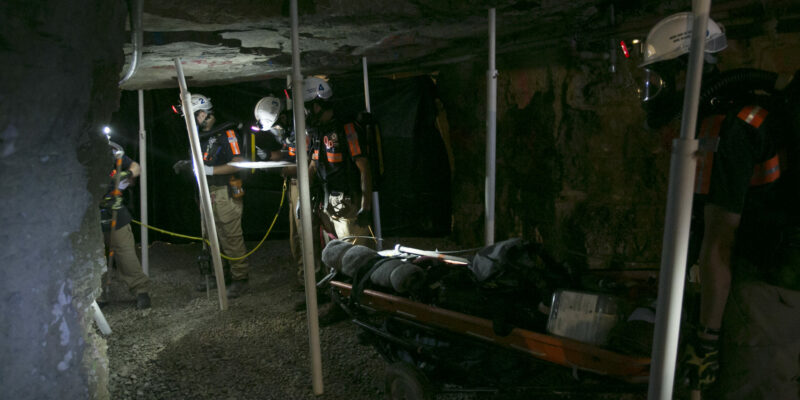
Escaping a mine disaster
Being trapped in a collapsed mine may be one of the most terrifying ordeals anyone could experience. There is the total darkness, the struggle to breath with low oxygen, no food or drink, and potentially no way to alert others to a rescue location.
Read More »John C. McManus wins Gilder Lehrman Prize for best book in military history
Dr. John C. McManus, Curators’ Distinguished Professor of history at Missouri S&T, has been awarded the seventh annual Gilder Lehrman Prize for Military History for Fire and Fortitude: The US Army in the Pacific War, 1941-1943 (Dutton-Penguin). The $50,000 prize is awarded by the Gilder Lehrman Institute of American History to recognize the best book in the field of military history published in English during the previous calendar year.
Read More »
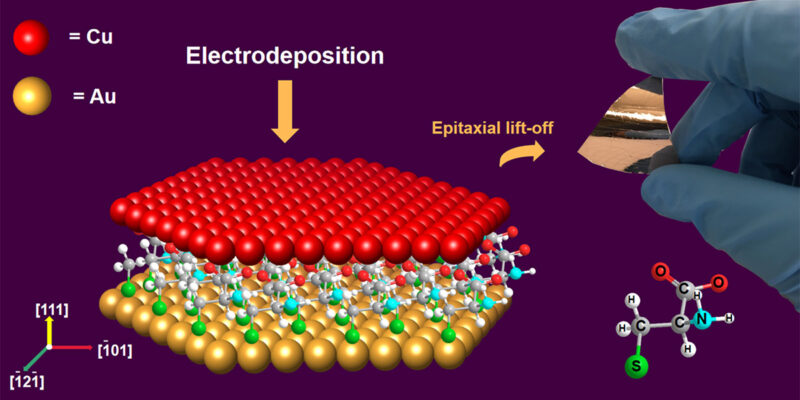
Researchers use amino acids to grow high-performance copper thin films
For the first time, researchers from Missouri University of Science and Technology have shown that highly ordered copper thin films can be crystallized directly on a one molecule-thick layer of organic material rather than on the inorganic substrates that have been used for years.
Read More »
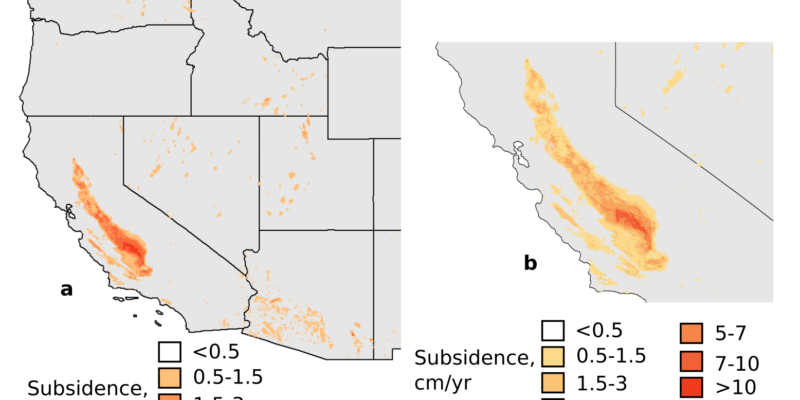
Research links sinking land to regions of high groundwater demand
Excessive pumping from underground aquifers can cause the surrounding land to sink and lead to damage to streets, bridges and other infrastructure, reduced groundwater storage, and contaminated drinking water, according to researchers at Missouri S&T. They are using a form of artificial intelligence known as machine learning to map the sinking – called land subsidence – to help water policy officials make informed decisions.
Read More »Missouri S&T wins grant for high-resolution 4-D X-ray CT scanner
By this time next year, researchers at Missouri University of Science and Technology who study the properties of various types of materials will have a highly sophisticated scanning tool available to help them, thanks to a grant of nearly $1 million from the National Science Foundation. The $918,397 NSF grant will help fund the purchase […]
Read More »
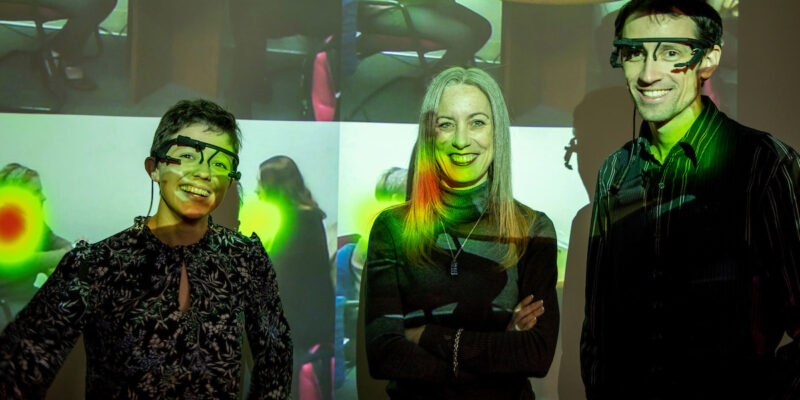
Researchers say job candidates are rated lower in virtual interviews
Many of us have wondered how a job interview conducted via Zoom or another video-mediated communication (VMC) tool would hold up against face-to-face interviews with other applicants. And that sneaking suspicion that the video interview is somehow lacking, is turning out to be true.
Read More »

Missouri S&T receives $1 million gift from the Sunderland Foundation to complete new lab
Missouri University of Science and Technology has received a $1 million gift from the Sunderland Foundation to complete construction of the Clayco Advanced Construction and Materials Laboratory in Butler-Carlton Civil Engineering Hall. The foundation also supported the project with a $100,000 gift in 2016. “We are deeply grateful for the Sunderland Foundation’s investment in this […]
Read More »
Missouri S&T prepares engineers for a future in space mining
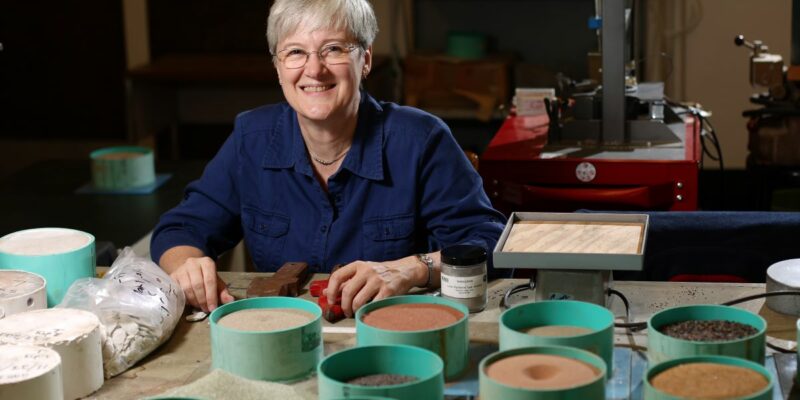
The moon, other planets – even asteroids – may hold promise as future sources of resources such as water, hydrogen, methane, and base and precious metals. Researchers at Missouri S&T hold a wealth of expertise in natural resource exploration and extraction as well as in critical and strategic minerals, so the university stands at the forefront of space resource exploration.
Read More »
Researchers say job candidates are rated lower in virtual interviews
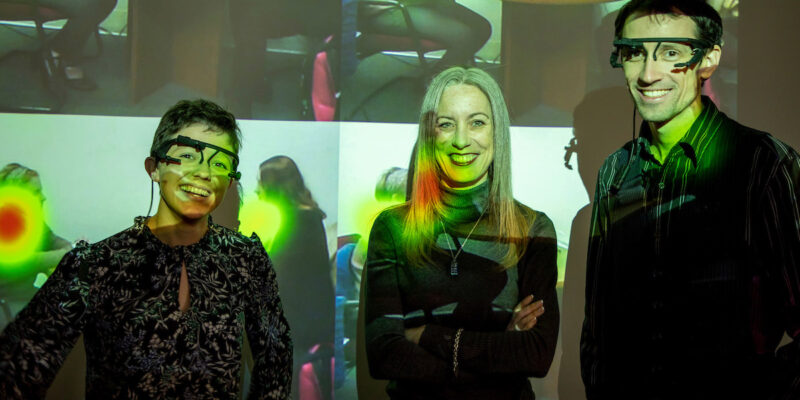
New research provides some of the first solid evidence that people who watch a virtual job interview rate the candidate substantially lower than those who watch the same interview in person.
Read More »Humanities scholar shares cultural knowledge with Missouri S&T and Rolla community
From analyzing the role of women in American space culture, to enlightening inquiring minds on the historical significance of pandemics, Dr. Marie Lathers is ready to share her more than 35 years of interdisciplinary humanities studies with students and faculty of Missouri S&T and with the Rolla community.
Read More » Sports Headlines
- Golf Starts Three-Day Tournament at Ken Partridge Invitational Tomorrow
- Baseball Extends Streak to 15; Three Miners Eclipse 100 Hits
- Edmonds and Sallade Record Milestones as Miners Win 7th Straight
- Volleyball Extends Streak to Six; Improves to 7-2 in GLVC
- Baseball Racks Up 25 Hits in Doubleheader Victory Over SBU; Win Streak Now at 14