Research
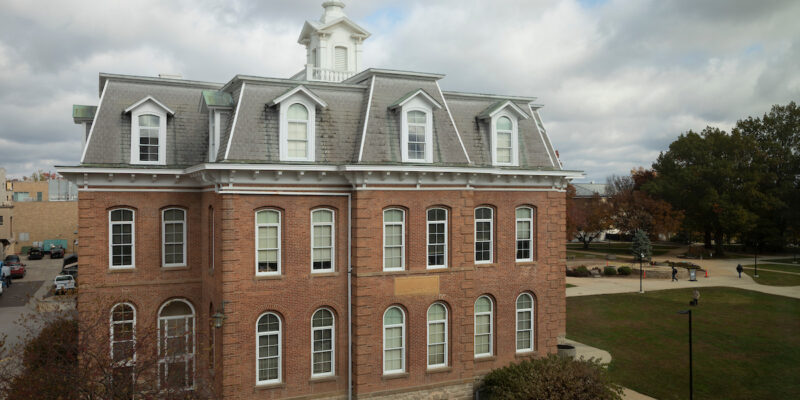
S&T math professors publish two new books
Two researchers from Missouri S&T have recently published new books focusing on advanced topics in mathematics.
Read More »

The ethics of investing in new infrastructure in the United States
President Joe Biden’s proposed $2 trillion investment in the nation’s infrastructure over the next decade comes as encouraging news to groups such as the American Society of Civil Engineers. But with every infrastructure plan comes a host of potential ethical issues that national, state and local leaders need to consider: gentrification, the potential effects of change in climate, impacts on local culture and the availability of affordable housing, to name a few.
Read More »S&T researcher’s new book reimagines philosophy ‘basics’
A new book written by a Missouri S&T researcher aims to better introduce students to philosophical ideas and concepts by reimagining what introductory material is presented in a beginner philosophy course.
Read More »
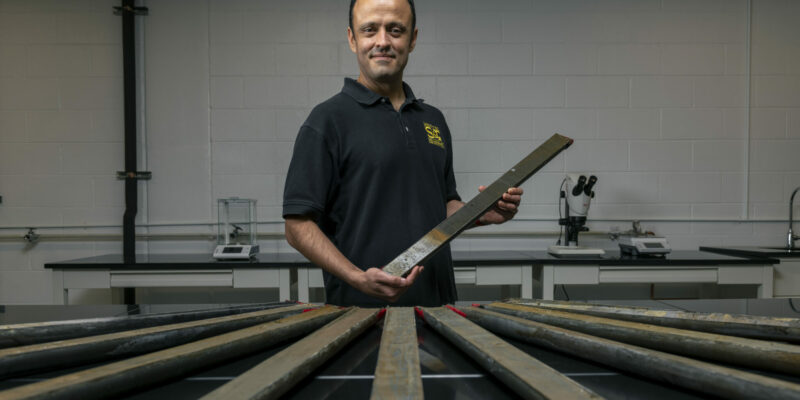
CAREER Award funds research on earthquake history
A researcher at Missouri S&T has won the National Science Foundation’s Faculty Early Career Development (CAREER) Award for his research into the history of earthquakes along the North American-Caribbean tectonic plate boundary, which runs through the Caribbean Sea from Haiti to the Guatemala-Mexico border. The research will provide new insights for elementary and middle school students and will help scientists better understand how and when earthquakes occur in the region.
Read More »

Steelmaking research saves energy, reduces costs with fiber optics
About 70% of steel production in the United States uses the electric arc furnace (EAF) process to melt scrap and virgin iron to create steel in a much more energy-efficient process than smelting from ore. But EAF steelmaking efficiency is dependent on many factors, and researchers at Missouri University of Science and Technology are working to save energy and costs related to EAF steel production by using fiber optic sensors.
Read More »

Missouri S&T researcher studying human-robot interaction wins NSF CAREER award
Research to understand how humans and robots communicate and interpret each other’s intentions has resulted in a Faculty Early Career Development (CAREER) award for Dr. Yun Seong Song, assistant professor of mechanical and aerospace engineering at Missouri S&T. The five-year, $538,876 award from the National Science Foundation (NSF) will support Song’s research to advance physical human-robot interaction.
Read More »

Putting electric vehicle charging stations on the map
Electric vehicles (EVs) are a small but growing segment of the automobile market as consumers look for alternatives to fossil fuel use. But how can you charge an EV overnight if you don’t have a garage where you can plug it in? Researchers at Missouri S&T used machine learning to help Kansas City planners prepare to expand the availability of EV charging stations in neighborhoods where many apartment dwellers lack places to charge their cars.
Read More »
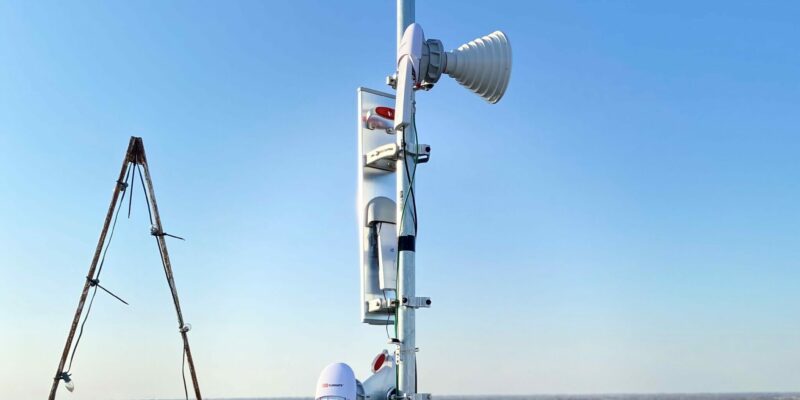
Missouri S&T broadband research wins national contract
At least 17 million residents of the United States lack access to high-speed internet, impeding their ability to use online education, telemedicine and remote work. Missouri S&T is leading a team of experts working to solve the challenge, and now their work is supported by a one-year, $300,000 grant award as part of U.S. Ignite’s Project OVERCOME.
Read More »History professor writes new ‘history of the losers’ of the Protestant Reformation
A Missouri S&T history professor has written a new book about the history of the Protestant Reformation, using new digital tools to find patterns in centuries-old letters.
Read More »

New cellular treatment could cure chronic artery disease
A new, cellular-level approach to removing plaque build-up in the arteries could eventually lead to a cure for the chronic disease known as atherosclerosis, according to a researcher at Missouri S&T. The method uses nanoparticles that can be designed to deliver plaque-busting drugs to specific cells in arteries. The nanoparticles have an average diameter of 150 nanometers, about 1/500th the diameter of a human hair.
Read More » Sports Headlines
- Golf Starts Three-Day Tournament at Ken Partridge Invitational Tomorrow
- Baseball Extends Streak to 15; Three Miners Eclipse 100 Hits
- Edmonds and Sallade Record Milestones as Miners Win 7th Straight
- Volleyball Extends Streak to Six; Improves to 7-2 in GLVC
- Baseball Racks Up 25 Hits in Doubleheader Victory Over SBU; Win Streak Now at 14