Research

Missouri S&T partners in hydrogen-energy collaborative
Missouri S&T is partnering with industry, business groups and academic institutions to form the Greater St. Louis and Illinois Regional Clean Hydrogen Hub Industrial Cluster to promote clean energy in the industrial sector.
Read More »

Hidden danger in electric vehicle fires
Like a fire in a wall, fires in electric vehicle (EV) batteries burn unseen. Researchers at Missouri S&T are working with mine operators and firefighting agencies to plan for and mitigate EV fire risks.
Read More »Missouri S&T reaches new highs for royalty income
Royalties from patents on commercialized inventions and products bring in hundreds of thousands of dollars in income every year for Missouri University of Science and Technology. During the fiscal year that ended June 30, 2022, Missouri S&T took in a record $996,235 in royalty income, an increase of 38% over the previous year.
Read More »
Missouri S&T receives $1 million grant to attract, retain and advance women faculty in STEM programs
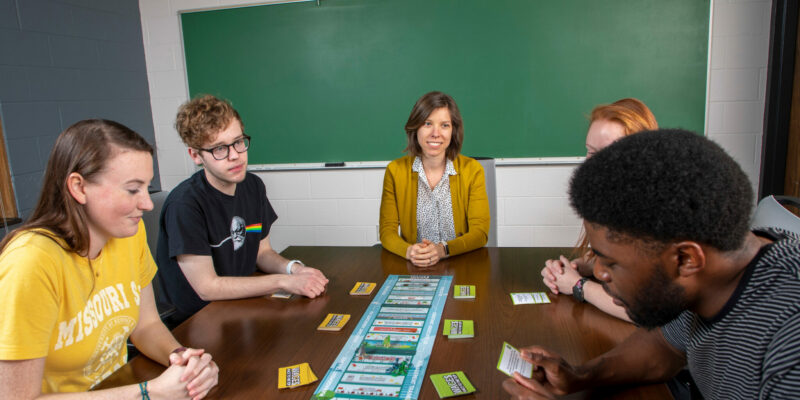
The National Science Foundation has awarded $1 million to Missouri S&T to support the university’s efforts to attract, retain and advance more women faculty into the fields of science, technology, engineering and mathematics (STEM). Dr. Jessica Cundiff, associate professor of psychological science, will lead the three-year project, which is intended to increase the representation of […]
Read More »Missouri S&T Ph.D. graduate wins $70,000 Laegeler Fellowship for solar farm protection research
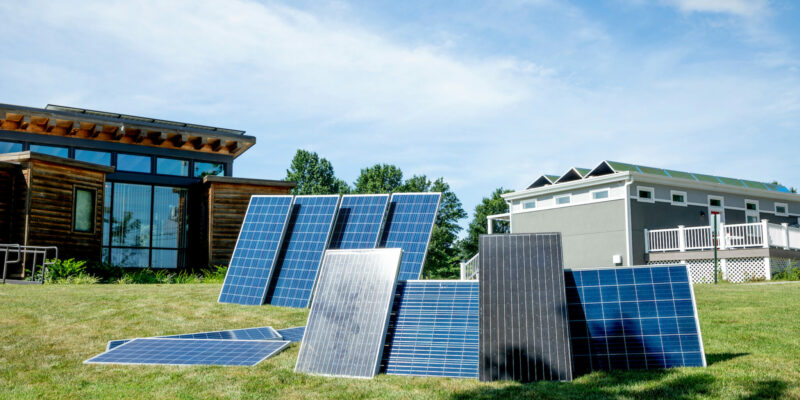
Research into new designs to help solar panels withstand severe weather threats landed a $70,000 fellowship for Yi Zhao, who earned a Ph.D. from Missouri S&T this spring. The Laegeler Sustainable Energy Fellowship – from Concept to Reality was created by two Missouri S&T graduates and will provide a stipend and benefits for Zhao to conduct postdoctoral research at S&T.
Read More »
The rise of renewable energy means utility companies must change business models
With the rise of individual households producing surplus power via solar panels and selling energy back to power companies, the profitability of electric companies could drop and lead to acquisitions and mergers. The electric industry has also seen changes in renewable energy integration and regulatory changes that could lead to shrinking profits and firm consolidations.
Read More »In new book, S&T historian explores archaeologists’ and Egyptologists’ social networks
When most of us think of social networks, we think of connecting digitally with others through sites like Facebook, TikTok or Twitter. A new book by Dr. Kathleen Sheppard, an associate professor of history at Missouri University of Science and Technology, discusses a different type of social network – a physical network of archaeologists, Egyptologists, […]
Read More »

In its first 12 hours, S&T’s Kummer College hosts first Ph.D. dissertation defense
Less than 12 hours after being officially established on July 1, the Kummer College of Innovation, Entrepreneurship, and Economic Development at Missouri S&T hosted its first doctoral dissertation defense. Javier Valentín-Sívico’s dissertation investigates the lack of adequate broadband in many rural communities. His advisor was Dr. Casey Canfield, assistant professor of engineering management and systems engineering.
Read More »
Missouri S&T investigates ceramics processing through $1.4 million project
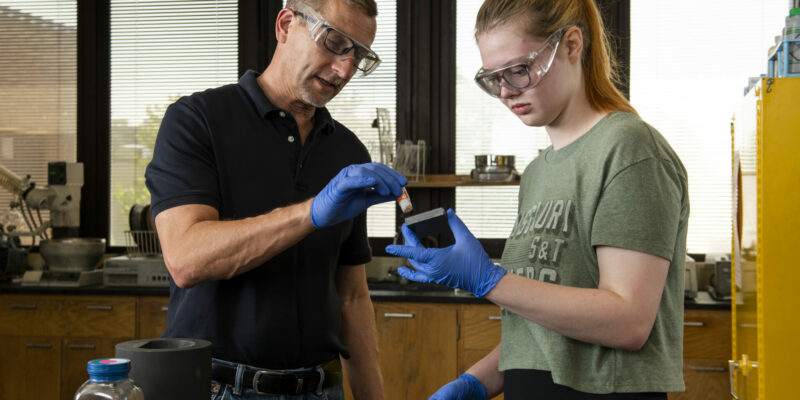
When you order fries at McDonald’s, you expect them to taste the same in Missouri as they do in Montana. That type of consistency is what researchers at Missouri S&T are trying to achieve in ultra-high-temperature ceramics processing for hypersonic vehicles.
Read More »
Smart, connected farms could assist agricultural hazard management
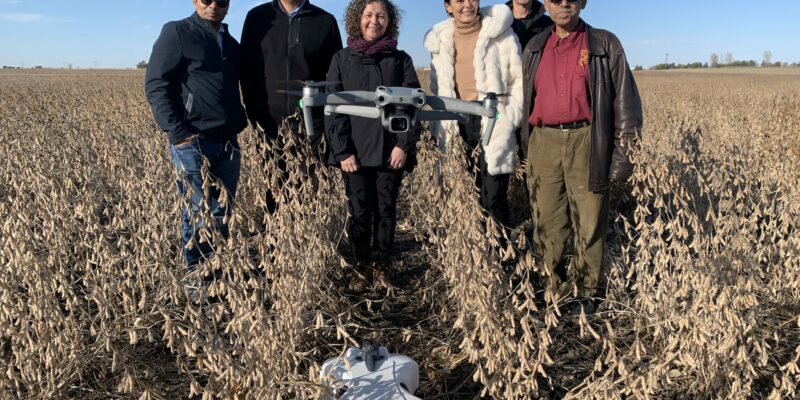
Farming communities face many threats to their livelihood – pest migration, disease spore dispersal, adverse weather and weed spread to name a few. Researchers at Missouri S&T are developing infrastructure for smart and connected farms to improve timely data sharing so that communities can better respond to production threats.
Read More » Sports Headlines
- Golf Starts Three-Day Tournament at Ken Partridge Invitational Tomorrow
- Baseball Extends Streak to 15; Three Miners Eclipse 100 Hits
- Edmonds and Sallade Record Milestones as Miners Win 7th Straight
- Volleyball Extends Streak to Six; Improves to 7-2 in GLVC
- Baseball Racks Up 25 Hits in Doubleheader Victory Over SBU; Win Streak Now at 14