Researchers lead push for health innovation at NextGen Pathways Symposium
Posted by news
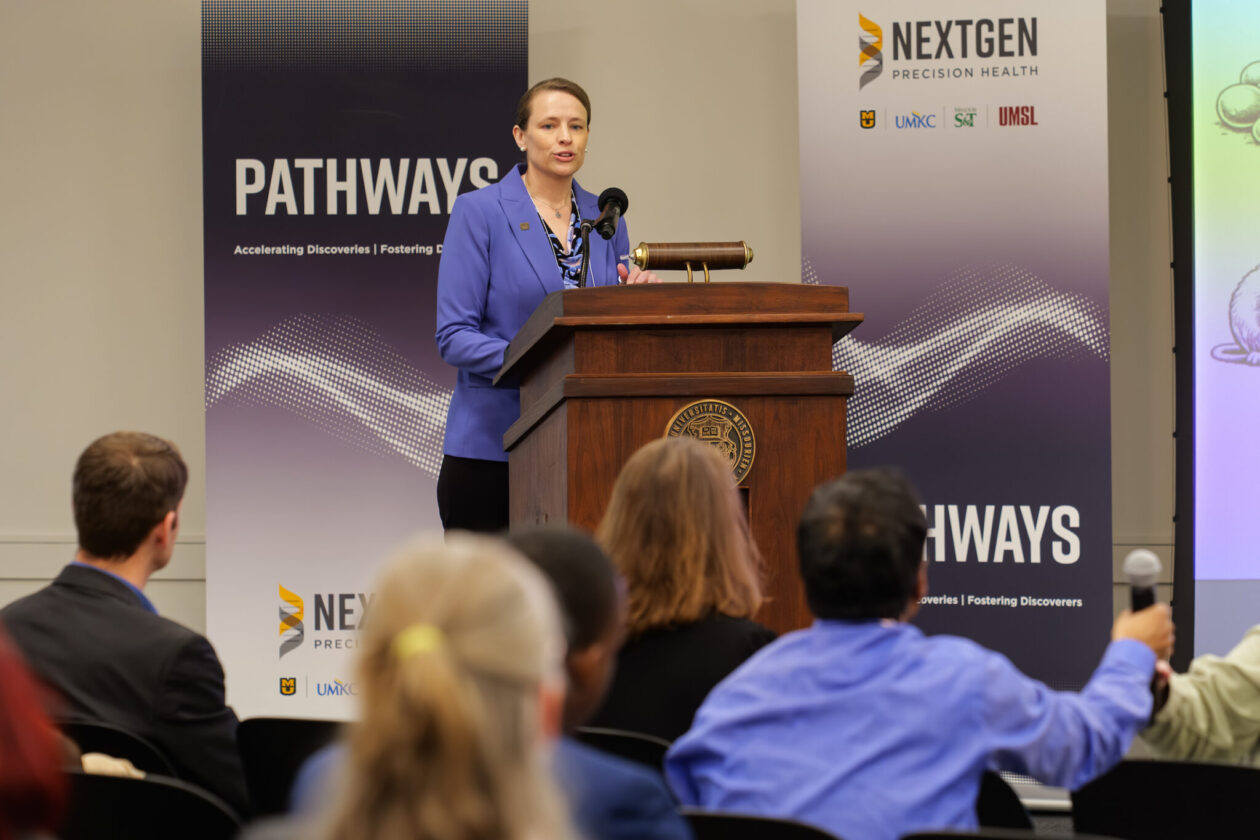
Dr. Gina Yosten, Kummer Endowed Chair of Biological Sciences, awaits questions from the audience following her talk about diabetes research March 13 in S&T’s Havener Center.
Article by Ben Stewart. Photos by Stewart, Mackenzie Lynch and Jaime Basnett.
Researchers from the Missouri University of Science and Technology joined colleagues from across the University of Missouri System at the Havener Center March 12-13 to share the latest developments from projects that could improve health outcomes for patients.
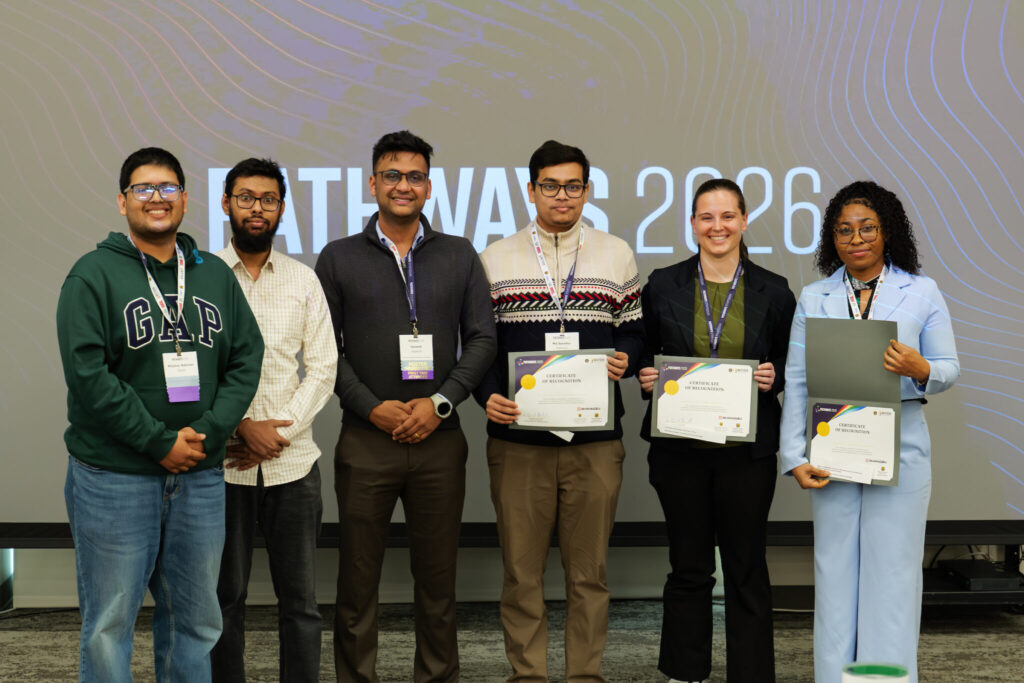
The third annual NextGen Pathways Symposium featured 42 poster presenters and 83 participants representing Missouri S&T. S&T swept the poster competition, with the four awards going to four Ph.D. students: Chikadibia Edward in chemistry, Parham Keshavarzi in mechanical engineering, Mizanur Rahman Jewel in computer science, and Rachel Bauer in explosives engineering.
That delegation included four researchers who delivered talks from the main stage: Dr. Anthony Convertine, Roberta and G. Robert Couch Associate Professor of Materials Science and Engineering; Dr. Gina Yosten, Kummer Endowed Chair of Biological Sciences; Dr. Ryan Gilbert, chair of the Linda and Bipin Doshi Department of Chemical and Biochemical Engineering, and Dr. Sunjeev Phull, NextGen Precision Health Fellow in chemical and biochemical engineering.
For faculty members and postdoctoral researchers like these – along with graduate students, staff, clinicians and undergraduate students – the Pathways event is designed to raise the visibility of promising ideas. It’s also intended to connect teams with complementary skillsets and accelerate progress toward solutions for challenges like cancers, rare diseases, cardiovascular and metabolic disorders, Alzheimer’s disease, infertility and other health issues.
The evening before the symposium, Missouri S&T leaders hosted a reception for attendees in the Innovation Lab, featuring research achievements across campus and opportunities for teams around the state to cooperate. The assembled participants – including representatives from the office of U.S. Senator Josh Hawley, BioNexus KC, and the Missouri Department of Higher Education and Workforce Development – heard from Chancellor Mohammad Dehghani, Vice Chancellor for Research and Innovation Kamal Khayat, Vice Provost and Dean of the College of Engineering and Computing David Borrok, Vice Provost and Dean of the College of Arts, Sciences, and Education Mehrzad Boroujerdi, and Vice Provost and Founding Dean of the Kummer College of Innovation, Entrepreneurship, and Economic Development Jim Sterling. Thursday evening also featured an opportunity for early career researchers to join a lab-to-market workshop presented by NextGen Postdoctoral Fellow Sunjeev Phull, who is based in the lab of Doshi Professor Mark Towler at Missouri S&T.
“It’s always been our team’s goal to try to bring people together,” says Dr. Dave Arnold, executive director of the NextGen Precision Health initiative. “This is my favorite meeting of the year. I feel like it’s a retreat for our labs to come together and meet people across the state.”
In total, 221 researchers attended to learn from colleagues’ successes and to meet with industry and community partners to better understand the nuances of patients’ needs. They brought expertise from a range of fields – artificial intelligence, clinical care, basic science, population health, intellectual property –and explored topics as diverse as biomaterials for bone and tissue regrowth, the ethics of precision health, the role of mitochondria in liver disease, the challenges of scaling eye care solutions around the world, leveraging explainable AI, and using new preclinical models to understand cellular development.
“The things we get to do, the questions we get to ask; it really is a privilege,” says Arnold. “So it’s our responsibility to share that work with the world.”
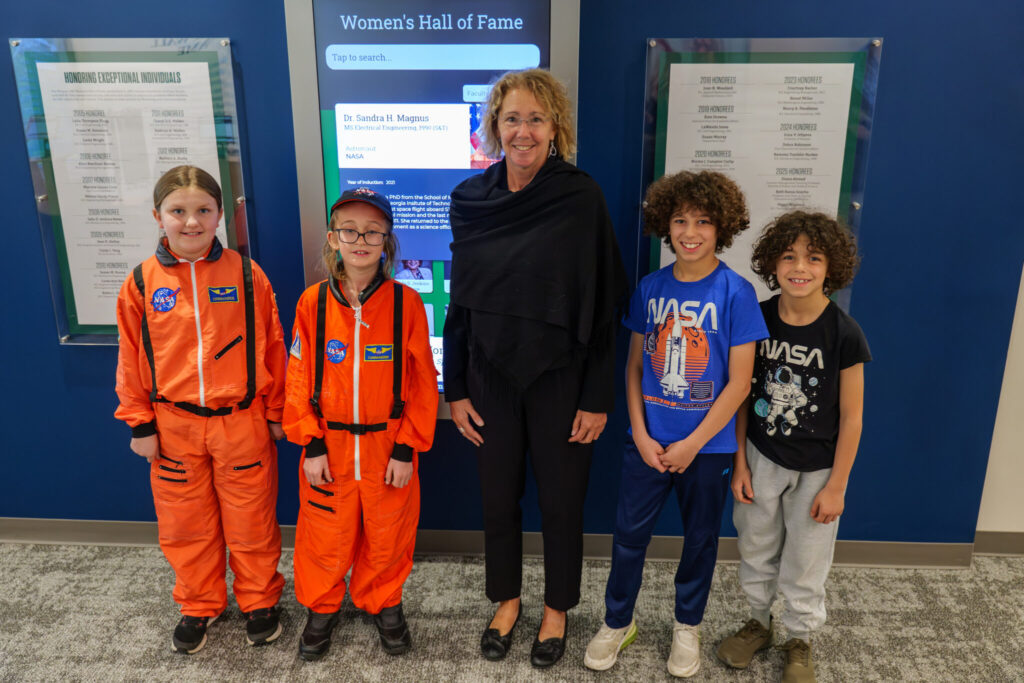
This year’s keynote speaker was Missouri S&T alumna Sandra Magnus, a NASA Astronaut Hall of Fame inductee in 2022 and former executive director of the American Institute of Aeronautics and Astronautics. In keeping with the broad theme of interdisciplinary science, her talk focused on “Curiosity-Driven Innovation in a Complex World” and the importance of leadership and clear communication for the success of ambitious projects like the International Space Station.
On average in the U.S., it takes 14 years for a new treatment to make it from the discovery phase to patients. That long translation process involves a series of experts from different domains. NextGen’s goal is to help those teams coordinate from the start to shorten their path to a new drug, device or other innovation. Programs like the NextGen’s Pathways Symposium, the Discovery Series of community science talks, and the NextGen Postdoctoral Fellowship are designed to contribute to that effort.
Next year, Pathways will be held at the University of Missouri in Columbia, followed by the University of Missouri-St. Louis in 2028.
NextGen Precision Health
Highlighting the promise of personalized health care and the impact of large-scale interdisciplinary collaboration, the UM System’s NextGen Precision Health initiative is bringing together innovators from across the system’s four research universities, MU Health Care and industry partners in pursuit of life-changing precision health advancements. It’s a collaborative effort to leverage the strengths of the entire UM System toward a better future for Missouri’s health. The initiative is anchored at the Roy Blunt NextGen Precision Health building, a state-of-the-art research facility which is expanding collaboration among researchers, clinicians and industry partners.

Posted by news
 Sports Headlines
- 2026 Miner Athletic Hall of Fame Induction Class Announced
- S&T Men's Basketball Earns Team Academic Excellence Awards; Five Miners Named to Honors Court
- S&T Men's Volleyball Earn AVCA Team Academic Award
- Ten Miners and Both Teams Earn USTFCCCA All-Academic; Fraser Named Scholar Athlete of the Year
- S&T Welcomes Ryan Hunt as New Assistant Track & Field Coach
Leave a Reply