Tag: materials science and engineering
College of Engineering and Computing honors graduate students
Seven Ph.D. students at Missouri S&T received dean’s honors on Thursday, May 28, from the College of Engineering and Computing (CEC) in recognition of their scholarly contributions and teaching excellence in their field. The honorees represent five departments within the college.
Read More »
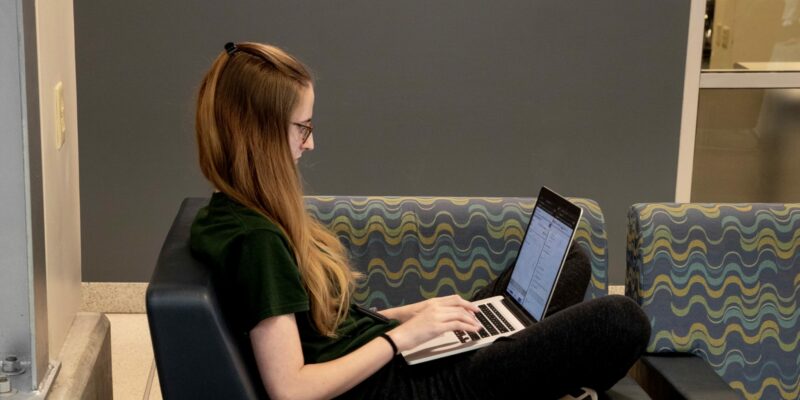
Successful transition to online-only courses for S&T faculty and students
Students and faculty at Missouri S&T are back from spring break and back to meeting virtually after COVID-19 shut down classrooms on the Rolla campus and at the other University of Missouri System universities. The transition to online education has gone fairly smoothly, according to faculty and students.
Read More »
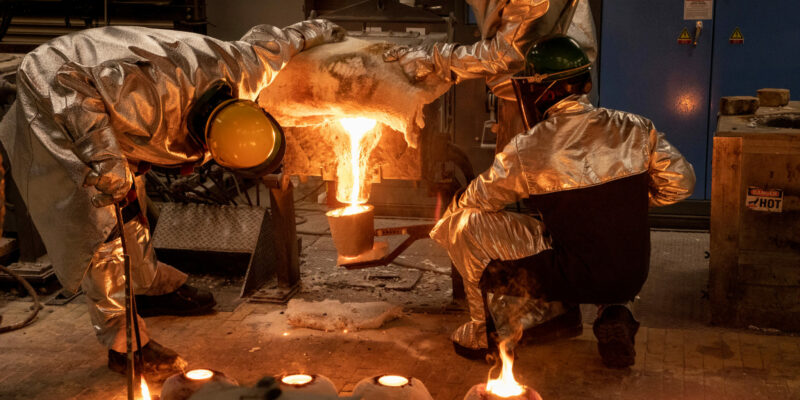
Researchers awarded $2.2 million grant to develop sensors for steelmaking
Steelmaking involves the handling of corrosive metal and oxide fluids at extremely high temperatures – about 1,600 degrees Celsius, which is several hundred degrees hotter than fresh lava from Mount Kilauea in Hawaii. Measuring the temperature, chemistry and fluid flow of molten steel under these conditions in real time is important to enable rapid responses to the changes in the steel during its production, according to researchers. The U.S. Department of Energy has awarded Missouri S&T part of a $2.2 million grant to develop new, more efficient ways to measure temperature, flow and chemistry during steelmaking to cut costs and improve worker safety.
Read More »

Missouri S&T student offers handmade help for Australia’s orphaned animals
As summer rains extinguish the bush fires that have ravaged Australia since September 2019 and have killed an estimated one billion animals, rescuers are keeping orphaned kangaroos, wallabies, koalas, bandicoots and other animals comfortable in pouches, wraps and nests handmade by crafters from around the world. One of those crafters is Laurie Gilson of Olathe, Kansas, a third-year student in mechanical and metallurgical engineering at Missouri S&T.
Read More »

Missouri S&T researchers create organ tissue with bioactive glass, stem cells and 3-D printer
An interdisciplinary team of Missouri S&T researchers is creating organ tissue samples using bioactive glass, stem cells and a 3D printer. The project could advance pharmaceutical testing and lead to a better understanding of how diseases affect human cells.
Read More »
New glass research center to support statewide medical research
By combining their materials science expertise with large-scale medical research, Missouri S&T researchers hope to meet clinical demands for glass-related solutions through a new Center for Glass Science and Technology (CGST). The new center will build on Missouri S&T’s previous success in glass research, which includes the development of bioactive glasses to treat open wounds and cancers.
Read More »High-strength “superalloy” expert to deliver Golick Lecture at Missouri S&T
Dr. David Seidman, the Walter P. Murphy Professor of materials science and engineering at Northwestern University and an expert on high-strength materials known as “superalloys,” will deliver the 26th A. Frank Golick Lecture in Materials Science and Engineering at Missouri S&T at noon Wednesday, March 20. Seidman’s presentation will be held in Room 125 Butler-Carlton Civil Engineering Hall on the Missouri S&T campus. The lecture is free and open to the public. Refreshments will be served from 11:30 a.m.-noon.
Read More »
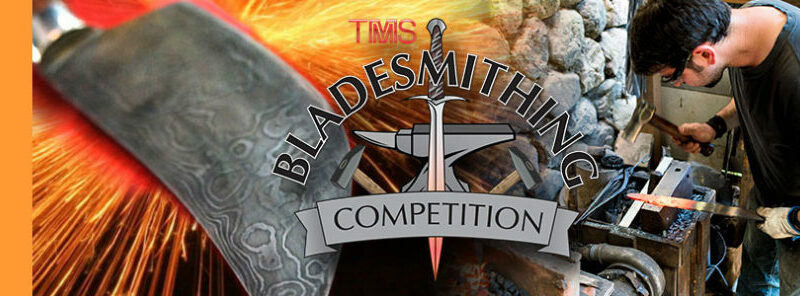
Missouri S&T students test their metal in bladesmithing competition
A group of Missouri S&T students will put their bladesmithing skills on display next week by presenting a hand-forged sword at an international competition sponsored by The Minerals, Metals & Materials Society (TMS).
Read More »

The year in research: 18 stories worth revisiting
From studies on how DNA could be used to deliver targeted cancer treatments to research on how to develop trust with artificial intelligence to studies on gender bias, traumatic brain injury, electric vehicle charging and more, Missouri S&T faculty and students explored a variety of research topics in 2018. Here are 18 major research stories from S&T for the 2018 calendar year.
Read More »Biomaterials expert Convertine joins Missouri S&T
Dr. Anthony J. Convertine, a biomedical engineer whose research seeks to tap polymer science to unlock the next steps in advancing drug delivery systems, has been named a Roberta and G. Robert Couch Assistant Professor of Materials Science and Engineering at Missouri S&T. Convertine joins S&T from the University of Washington, where he rose to the position of research associate professor of bioengineering after starting there as a senior postdoctoral fellow in 2006.
Read More » Sports Headlines
- Miners Split GLVC Opening Doubleheader at Drury
- Fraser Wins National Title as Miners Cap Historic NCAA Championships
- Miners End Nationals with 8 All-Americas, Team Places 19th
- Baseball Sweeps Saturday DH vs Quincy; Bates Throws Complete Game with 0.00 ERA
- Miners Claim Two Podium Finishes on Opening Day of NCAA Championships