Department of Chemistry
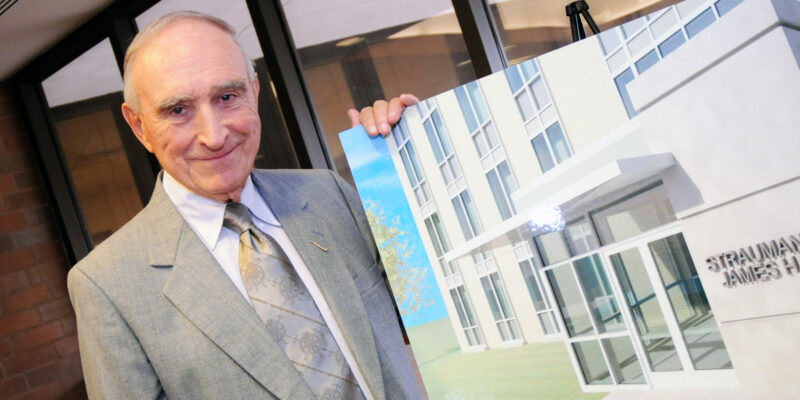
Venerable vanguard of S&T chemistry to present Stoffer Lecture Oct. 8
Dr. William J. James, professor emeritus of chemistry, will share personal memories and compelling highlights of his 65-year academic career at Missouri S&T for the third annual Dr. James O. Stoffer Lecture to be held at 4:30 p.m. Monday, Oct. 8, in Room G-3 Schrenk Hall on the S&T campus. The lecture is free and open to the public. Following the lecture, a reception honoring James will be held in the commons area on the third floor of Schrenk Hall.
Read More »
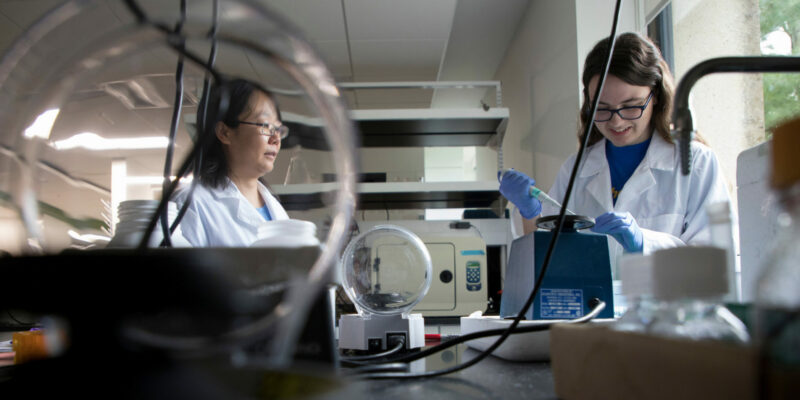
Chemistry undergraduate completes summer fellowship with gratitude and a published, peer-reviewed paper
Rachel Nixon, a junior in chemistry at Missouri S&T and recipient of the new Carey and Christine Bottom Endowed Scholarship in Undergraduate Chemistry Research, is thankful for the 10-week program she completed this summer. Working in Dr. Risheng Wang’s bionanotechnology lab eight hours a day, Nixon finished her peer-reviewed, published paper for a DNA-origami project already underway, then began a new project.
Read More »

Missouri S&T chemist rolls the dice to better identify chiral molecules in drugs
“High risk, high reward” is the kind of discovery Dr. Garry Grubbs seeks with a new experiment designed to rapidly identify the atomic structure of chiral molecules widely used in pharmaceutical drugs. The finding could significantly reduce the time and costs involved in pharmaceutical development and manufacturing.
Read More »

Ozark Biomedical Initiative Research Symposium to be held Aug. 18
Researchers from Missouri S&T and Phelps County Regional Medical Center (PCRMC) will present their research at an annual symposium hosted by the Ozark Biomedical Initiative (OBI) on Saturday, Aug. 18.
Read More »

Researchers mimic Legos for molecular building blocks, earn $411,000 NSF grant
Scientists at Missouri S&T are drawing inspiration from toy building blocks to create fixed molecular units used to accelerate the material discovery process known as rational design. They’ll use these “molecular blocks” to discover highly ionic conductive materials that could be used to make today’s much sought after all-solid-state lithium batteries.
Read More »
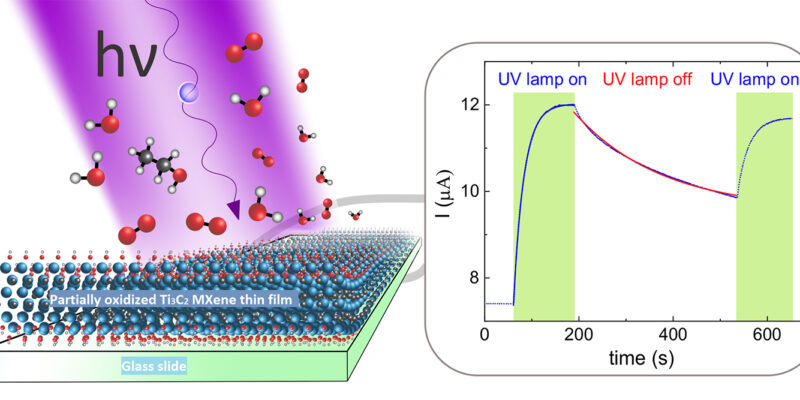
Not always bad—MXenes’ spontaneous oxidation harnessed to create 2-D nanocomposites
Researchers at Missouri S&T have discovered a new way to harness the potential of a type of spontaneously oxidized MXene thin films, to create nanocomposites that could sense both light and the environment. Previously, such spontaneous oxidation was considered detrimental because it degrades the MXene structure. The research is published in the June 2018 issue of ACS Nano, one of Google Scholar’s top-rated, peer-reviewed scientific journals.
Read More »

S&T researchers co-author first industry-wide report on sustainable jet fuel emissions
The National Academies of Sciences, Engineering, and Medicine Transportation Research Board has released a flagship report on the air quality impacts of sustainable alternative jet fuel (SAJF) emissions. The report is based in part on reviews by Missouri University of Science and Technology faculty Dr. Philip D. Whitefield, chair and professor of chemistry and director […]
Read More »

Missouri S&T doctoral student works to improve drug safety, efficacy with new chiral templates
In the early 1960s, the Thalidomide drug scare caused thousands of worldwide infant deaths and birth defects from a morning sickness medicine for expectant mothers. The disaster transformed drug regulation systems, and changed the pharmaceutical industry’s understanding of chiral properties: the notion that molecules with otherwise identical properties are in fact mirror images, like your right and left hands. Missouri S&T materials science and engineering doctoral student Meagan Kelso wasn’t even close to being born when the chiral consequences of Thalidomide first became apparent nearly 60 years ago. But the drug industry’s continued efforts to fine-tune how it first identifies and then separates chiral compounds is driving the native Texan’s Ph.D. research.
Read More » Sports Headlines
- Edmonds Named GLVC Setter of the Week, Ranks Third Nationally in Assists per Set
- Smith Hits 7 RBIs in Victory over Rockhurst that Sets Program Record for Consecutive Wins with 11
- Softball Rallies Back, Secures Game Two Victory Over UIS
- Golf Set for Belterra Invite; Seeking Sixth Straight Top-3 Finish
- Miners Take Down Bearcats in Three, Extend Streak to 13 Straight Sets Won