Two with S&T ties help shape national report on radiation exposure for flight crews
Posted by Kaitlin Brothers

Photo by Adobe Stock.
A Missouri S&T faculty member and an alumnus recently served on a national committee that examined radiation exposure risks faced by airline flight crewmembers and recommended ways to better monitor those risks.
Dr. Casey Canfield, associate professor of engineering management and systems engineering at S&T, and Dr. Christopher Mertens, a senior research physicist at NASA Langley Research Center, served on the National Academies of Sciences, Engineering, and Medicine committee titled Assessing Radiation Exposure, Health Outcomes, and Mitigation Strategies for Flight Crewmembers.
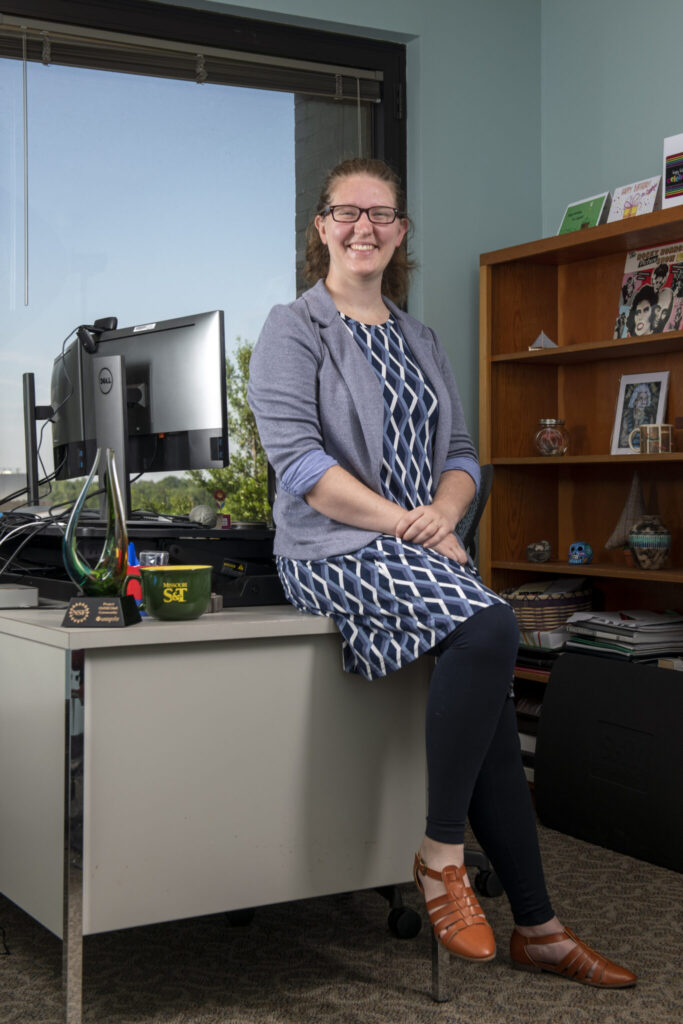
The committee spent about nine months evaluating research, radiation exposure models and strategies to reduce occupational radiation exposure among commercial flight crews.
“Because of regulations, the amount of occupational exposure to radiation in the U.S. has dramatically declined,” Canfield says. “Now we’re in a situation where flight crews are among the most highly exposed to radiation. It’s a low level of exposure but the concern is that risk accumulates over time, so over a full career, there might be an increased risk of cancer. Pregnant workers may also want to reduce their radiation exposure.”
Flight crewmembers are exposed to naturally occurring cosmic radiation at high altitudes throughout their careers. The committee examined the potential health impacts of cumulative exposure, including cancer and reproductive health risks, while evaluating approaches for tracking and reducing exposure.
Canfield said one focus of her work on the committee involved risk communication and identifying how information about radiation exposure should be shared with workers.
“The piece that I was really focused on was part of the mitigation measures,” she says. “I supported the risk communication piece of how we should talk to people about their radiation exposure through reports and training.”
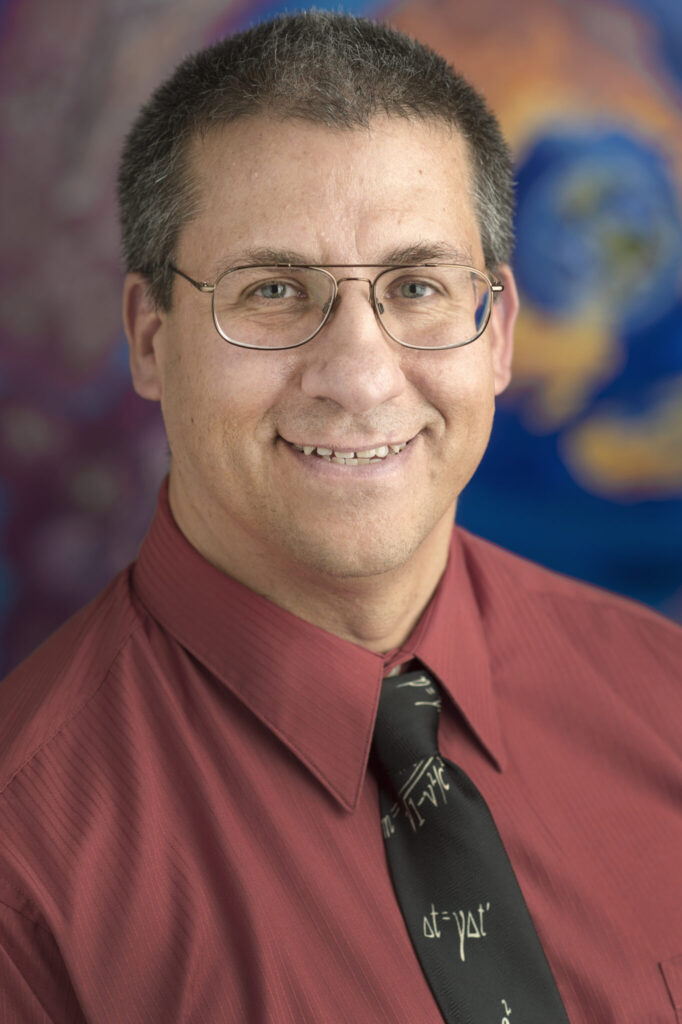
Mertens, who earned a master’s degree in physics from S&T in 1991, contributed expertise developed through two decades of research on radiation exposure in aviation.
“For the last 20 years, I’ve been developing a real-time physics-based radiation model of cosmic rays, galactic cosmic rays, solar energetic particle events that predicts the radiation exposure in aircraft for commercial air crew and passengers,” Mertens says.
Mertens developed the Nowcast of Aerospace Ionizing Radiation System (NAIRAS) model, which is used by airlines and government agencies to predict radiation exposure during flight operations.
“My role was to evaluate the state of the art in modeling radiation exposure and what advances need to be made, how the validation of the models are going and what kind of measurement programs and capabilities need to be invested in in the future,” he says.
Among the report’s recommendations is to develop an ensemble modeling approach for predicting radiation exposure during solar energetic particle events, similar to the way multiple models are used in hurricane forecasting.
“One of the other recommendations is that there’s really not enough publicly available measurement data to validate the models,” he says.
The committee’s report also recommends that the Federal Aviation Administration take a more active role in managing occupational radiation exposure, establish improved exposure-tracking systems and work with federal agencies to strengthen radiation monitoring and research efforts.
Canfield said the committee’s work brought together experts from a wide range of disciplines.
“The report is officially out, and then we’re going to do a public webinar later this month,” she says. “We did a briefing with the Federal Aviation Administration (FAA) and we did a briefing with Congress.”
Register for the public webinar online, which will be held June 29.
Read the full report, Assessing Radiation Exposure, Health Outcomes, and Mitigation Strategies for Flight Crewmembers (2026) online at www.nationalacademies.org.

Posted by Kaitlin Brothers
 Sports Headlines
- Missouri S&T Shatters School Record with 381 GLVC All-Academic Honorees
- Twelve Miners Earn CSC Academic All-District Honors for Track & Field/Cross Country
- Fourteen Missouri S&T Teams Earn Team Academic All-GLVC Recognition
- Four from Men's Volleyball, Two from Men's Golf Earn CSC Academic All-District
- Record-Setting Season Earns Nelson CSC Academic All-America Recognition
Leave a Reply