S&T researcher awarded $2 million to develop AI for concrete supply chain security
Posted by Greg Edwards
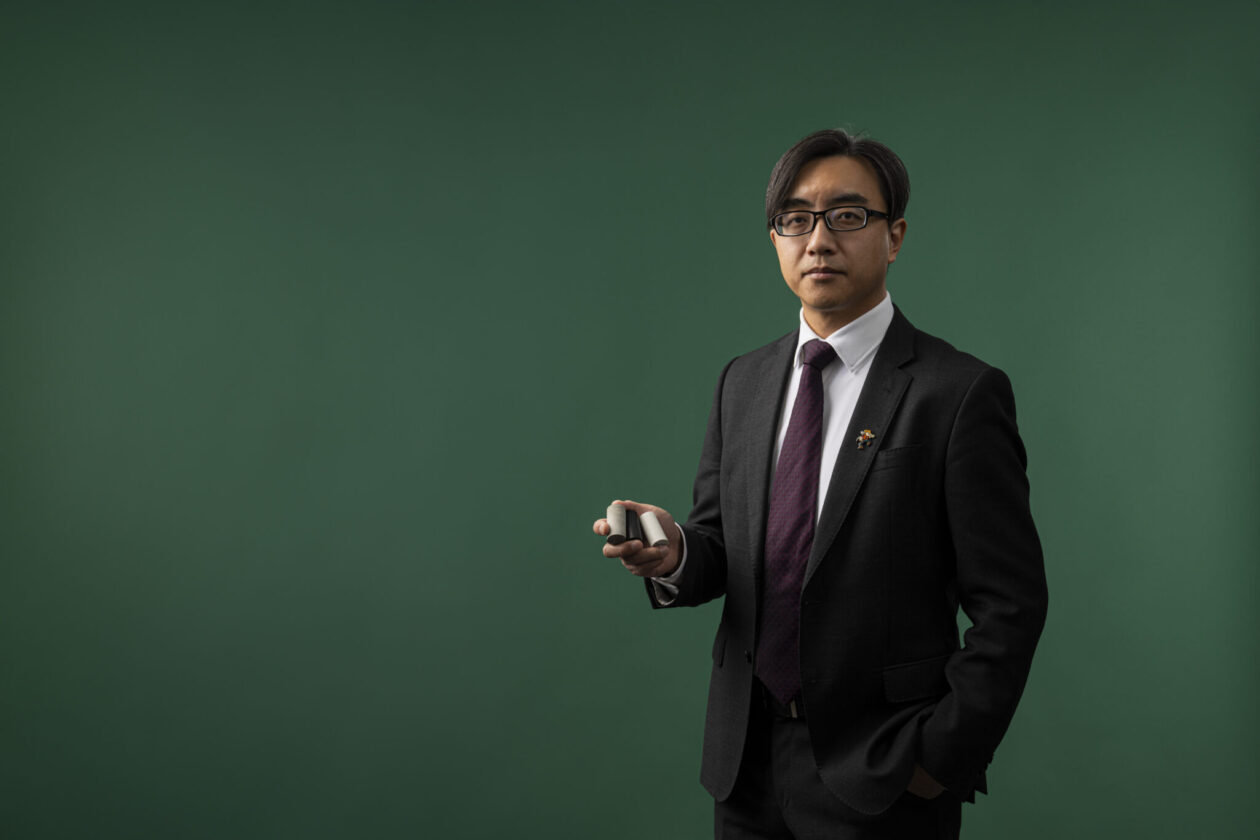
Dr. Hongyan Ma holds samples related to his research on materials that could be used in place of traditional cement. Photo by Michael Pierce/Missouri S&T
A Missouri S&T researcher has been awarded $2 million from the U.S. Department of Energy’s Office of Critical Minerals and Energy Innovation to develop artificial intelligence tools aimed at strengthening the nation’s construction materials supply chains by expanding the use of alternative materials in concrete production.
The project, led by Dr. Hongyan Ma, a Kummer Impact Professor of civil, architectural and environmental engineering and Benavides Scholar at Missouri S&T, was one of 20 projects selected through DOE’s $52 million initiative aimed at supporting American manufacturing and industrial competitiveness.
“Concrete is the most widely used construction material in modern infrastructure, but producing the cement that binds it together currently requires large amounts of energy to heat limestone and other raw materials at extreme temperatures,” Ma says. “This research will help strengthen the U.S. supply chain by making better use of alternative materials that are readily available. It will help manufacturers more quickly identify ways to reduce their reliance on conventional cement.”
Ma’s team will build a database containing more than 20,000 extensively documented entries related to potential cementitious materials, such as coal ash, slag, naturally occurring materials rich in silica, recycled concrete, mine tailings, ground glass, mineral fillers and other industrial waste products, along with concrete performance data.
The project’s AI system will then evaluate thousands of potential combinations of the materials to identify blends that could replace 60% to more than 80% of the cement traditionally used in concrete mixtures while still meeting industry performance standards for strength and durability.
As part of the project, the team also will produce and test larger batches of concrete with the concrete batching plant in S&T’s Clayco Advanced Construction Materials Laboratory to evaluate how the AI-designed materials perform under conditions closer to what construction and manufacturing professionals will face.
Ma says the research will extend far beyond Missouri S&T’s Rolla campus and include several industry partners providing resources, demonstrations and support for implementing the materials and technologies in practical applications.
“Collaborating with industry and community partners is important for a project like this because they provide access to different materials, production perspectives and testing environments,” Ma says. “They will help us better understand how these materials and technologies could be used more broadly across the industry.”
Partners include Wiss, Janney, Elstner Associates Inc.; Reserve Management Group; Ecocem Americas; Cleveland-Cliffs Inc.; the Quapaw Nation; Ozinga; and Carbon Negative Solutions. Ma says the groups have committed $720,000 toward the project, bringing total project funding to $2.72 million.
“The support we’ve received from the federal government and our project partners shows how important this issue has become for the future of infrastructure and manufacturing in the United States,” Ma says. “We’re excited to develop approaches that are more flexible, more efficient and better suited for future construction needs.”
Co-principal investigators from S&T include Drs. Wenyu Liao, assistant research professor of civil engineering; Kamal Khayat, vice chancellor for research and innovation and the Vernon and Maralee Jones Professor of Civil Engineering; and Mahelet Fikru, professor of economics.
To learn more about Missouri S&T’s civil, architectural and environmental engineering programs, visit care.mst.edu.
About Missouri S&T
Missouri University of Science and Technology (Missouri S&T) is a STEM-focused research university of over 7,000 students located in Rolla, Missouri. Part of the four-campus University of Missouri System, Missouri S&T offers over 100 degrees in 40 areas of study and is among the nation’s top public universities for salary impact, according to the Wall Street Journal. For more information about Missouri S&T, visit www.mst.edu.

Posted by Greg Edwards
 Sports Headlines
- 2026 Miner Athletic Hall of Fame Induction Class Announced
- S&T Men's Basketball Earns Team Academic Excellence Awards; Five Miners Named to Honors Court
- S&T Men's Volleyball Earn AVCA Team Academic Award
- Ten Miners and Both Teams Earn USTFCCCA All-Academic; Fraser Named Scholar Athlete of the Year
- S&T Welcomes Ryan Hunt as New Assistant Track & Field Coach
Leave a Reply