Go with the flow: I&E Fellow hopes to solve water challenges
Posted by Kaitlin Brothers
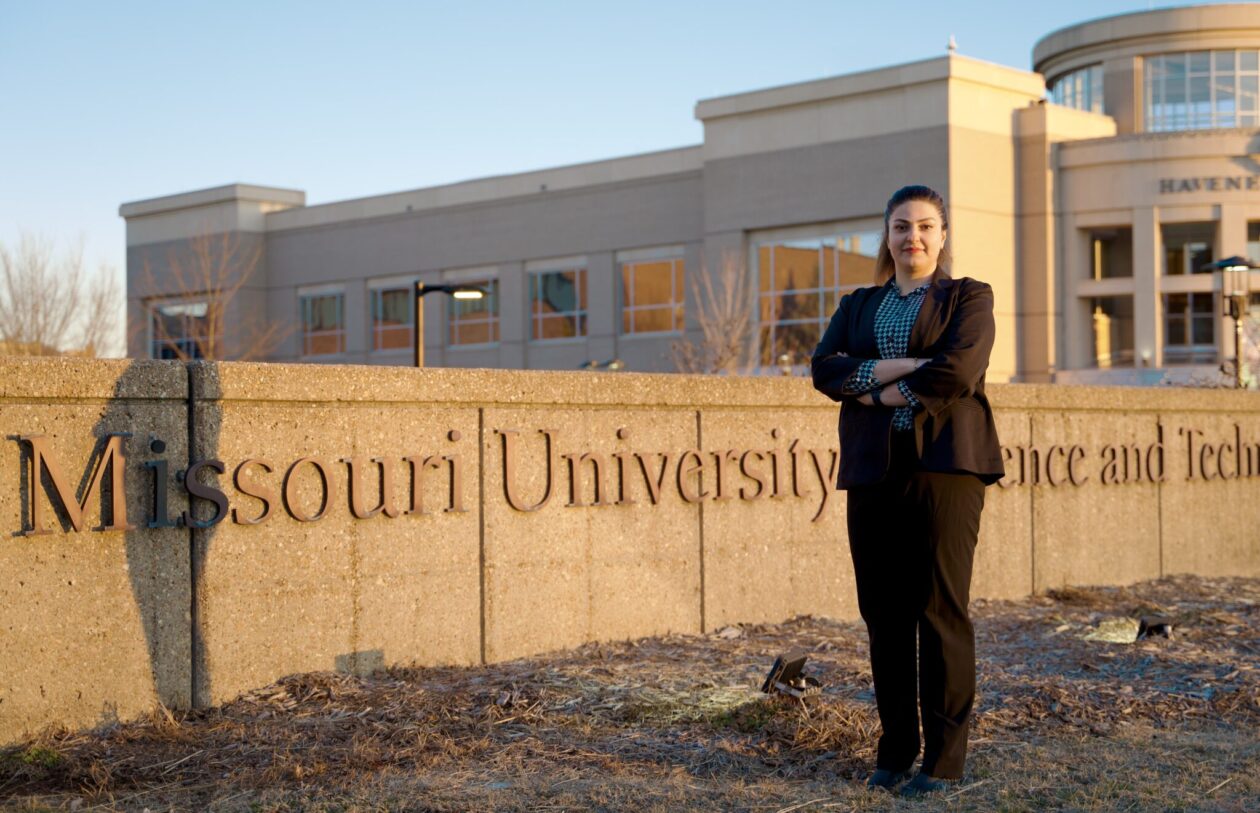
Effat Eskandari is a Ph.D. candidate in geological engineering and Kummer I&E Doctoral Fellow at Missouri S&T. Her research focuses on advancing sustainable water and land management in agricultural systems and enhancing resilience in the Midwest. Photo submitted by Eskandari.
Effat Eskandari’s research journey begins with a simple curiosity about something that most people take for granted: fresh water.
Originally from Iran and now a Ph.D. candidate in geological engineering at Missouri S&T, she’s built her academic path around understanding how water moves through and beneath the surface.
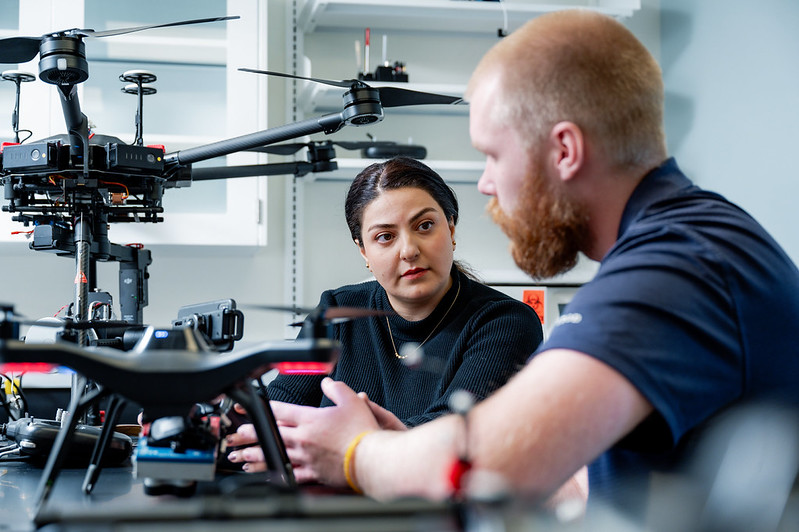
As a Kummer I&E Doctoral Fellow, she studies how soil and water interact in agricultural systems, using drone-based imaging, near-surface sensing and machine learning. Her work focuses on improving sustainability in land and water management, helping meet today’s needs while protecting resources for future generations.
“I’ve always been fascinated by water,” Eskandari says. “Many of the processes of water are not directly visible and it is mythical for me. The hidden complexity of groundwater is what drew my curiosity to this field.”
The future of water
Eskandari’s research as a master’s student at Ferdowsi University of Mashhad in Iran focused on sustainable water management in arid and semi-arid regions. She studied how surface water and groundwater interact, especially in areas where water use is complex or contested.
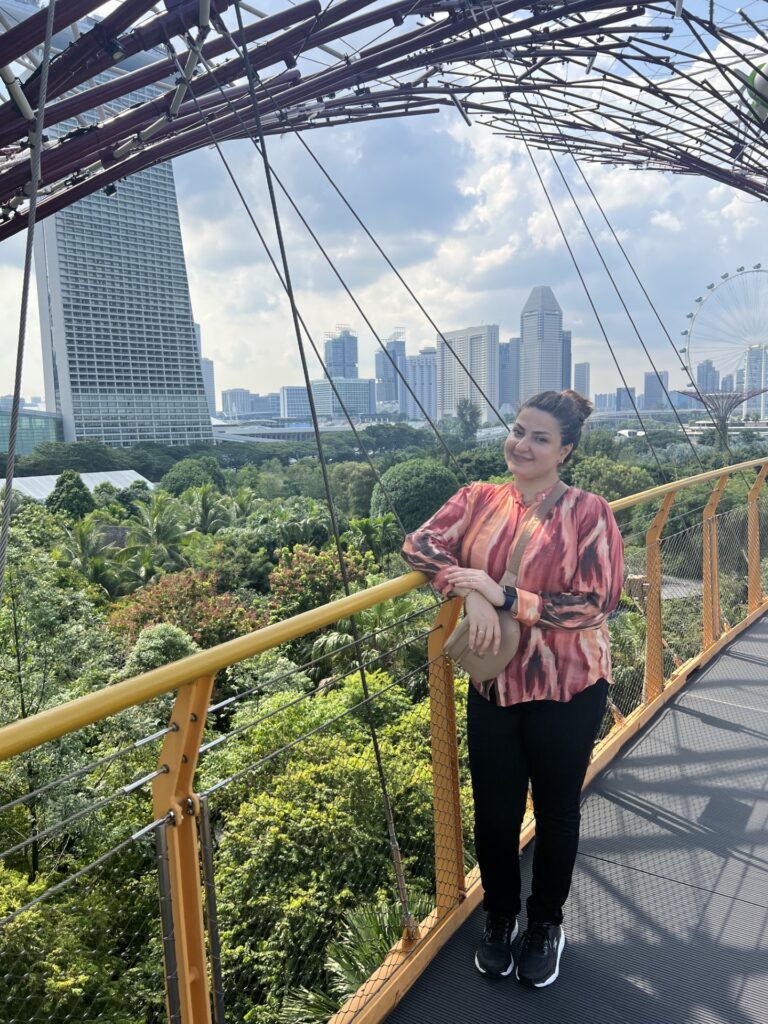
Using tools like stable isotopes, which help trace water’s origin and age, and hydrogeochemical analysis, which examines what’s in the water, she evaluated how much different water sources depend on rainfall. Her research provides a scientific framework to help decision makers identify which resources are more reliable during dry periods and supports more sustainable water management.
“A big part of my academic research was always sustainability. I believe sustainability means spreading kindness through science,” she says. “We use resources today while ensuring we preserve them for future generations.”
After completing her master’s degree, she contributed to several interdisciplinary projects in Iran before moving to Singapore. In Singapore, she continued her collaborations with scientists across fields, including hydrogeology, environmental science, engineering and chemical engineering. She also collaborated internationally with researchers from institutions in Singapore, Germany, Canada the United States and Iran.
An entrepreneurial opportunity
In 2022, Eskandari came to S&T for her doctorate in geological engineering as a Kummer I&E Fellow. She was drawn to S&T due to its strong research environment, and for a research project focused on sustainable water and land management with entrepreneurial potential.
“A major factor in my decision was the focus on innovation and entrepreneurship, since the new challenges that we face today need to be addressed through innovative approaches” she says. “It’s more about being creative to solve new challenges through the scientific knowledge that we learned in academia.”
She said one of the most meaningful moments of the I&E Fellowship came in February 2024, when she represented S&T at a USDA NIFA program. Among about 46 participants from across the country, she was the only engineer, with the rest primarily focused on agriculture-related fields.
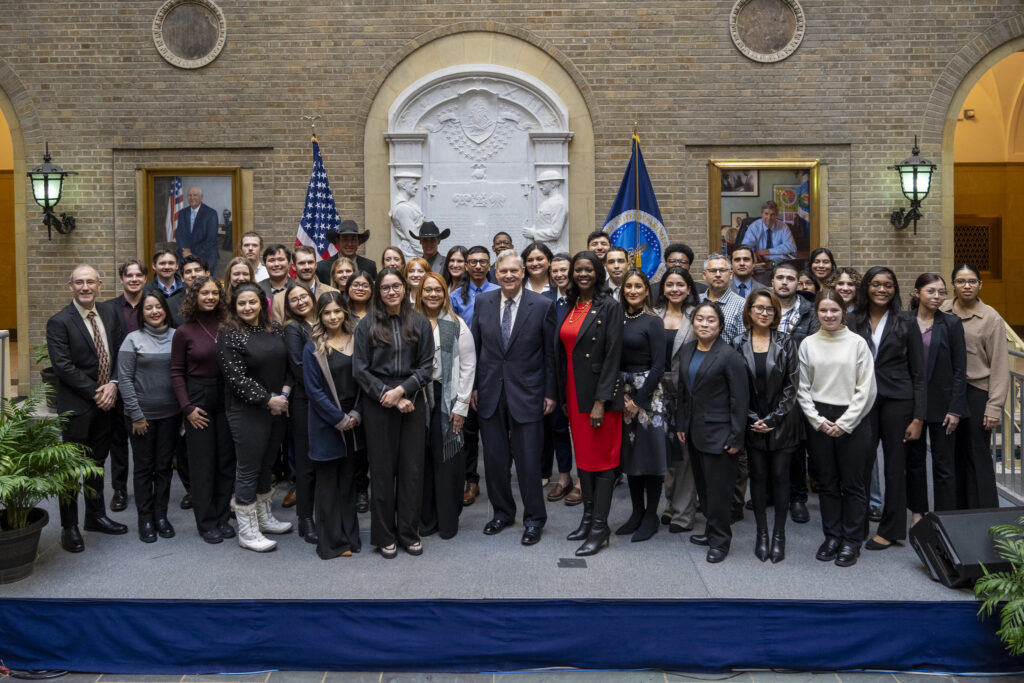
“The experience reinforced my passion for water-related research and helped me recognize a deeper purpose in my research: solving real challenges that benefit society,” Eskandari says.
Eskandari says the Kummer I&E Fellowship gives her the opportunity to think beyond science and helped her develop a creative mindset, strengthening her ability to translate scientific knowledge into solutions.
“When you finish a project, it’s about what value you can add to the world and what problem you will solve, not just for yourself,” she says.
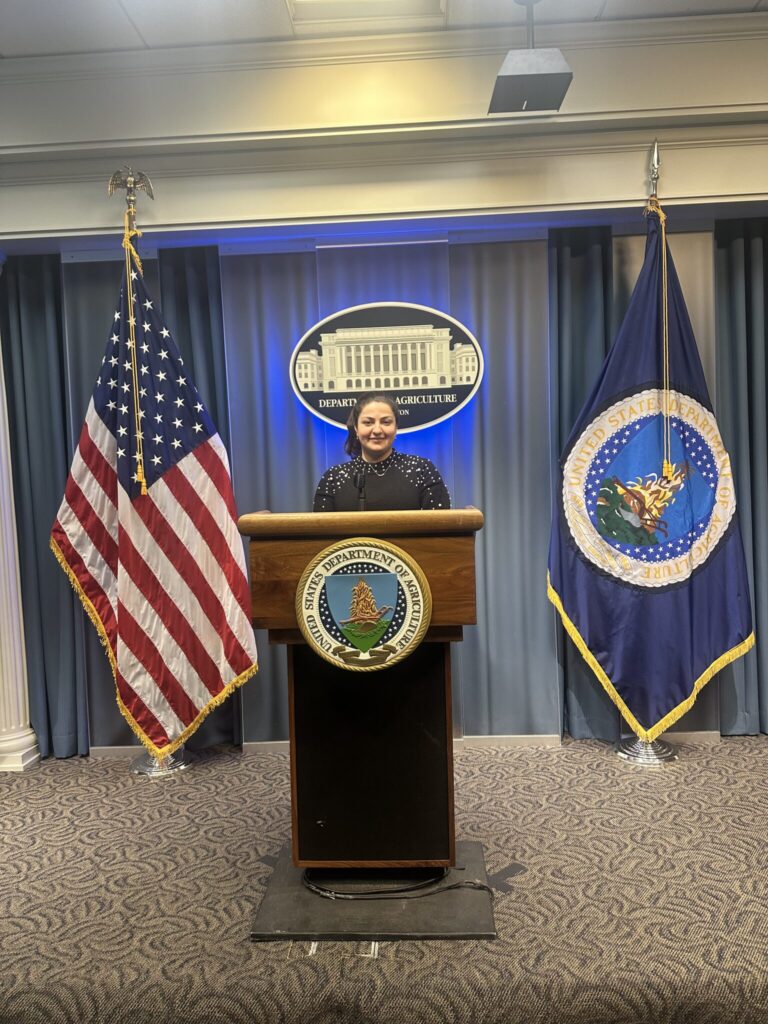
During her time as an I&E Fellow, Eskandari has seen a lot of success. She has received awards, including the Most Innovative Research Award at the 2023 Graduate Research Showcase, and runner-up in the Three-Minute Thesis competition in 2025.
She also earned all five Badges of Entrepreneurial Excellence, a program that recognizes student achievements beyond the classroom.
Her research has also been presented at the American Geophysical Union (AGU) in 2023, 2024 and 2025. Two manuscripts from her research are currently under review in recognized journals in the field, including International Soil and Water Conservation Research, and the Journal of Hydrology.
A meaningful impact
Eskandari says that working toward a larger purpose, such as building more resilient environmental systems and advancing sustainable agriculture in the Midwest, has given her research a deeper sense of meaning.
“I’ve always been interested in water science research, and this work helped me understand its role in agricultural systems and gave me a broader perspective about sustainability” she says.
Eskandari’s research focuses on integrating advanced technologies such as UAV (drone) remote sensing, near-surface geophysics and machine learning to better understand soil conditions.
By combining these tools, the research aims to produce detailed soil health maps that can support more informed decision-making for farmers, policymakers and land managers. The research can improve agricultural productivity while also protecting the environment.
“As global population growth increases pressure on food systems, agriculture must become more efficient without further degrading natural resources,” she says. “This work supports more sustainable farming practices that aim to increase crop yields while reducing environmental impact.”
Teaching the next generation
Eskandari is set to graduate next fall. After that, she hopes to connect academia to industry.
“I want to combine science and innovation to create a meaningful impact,” she says. “To me, research goes beyond publications and grants: it’s about solving real problems to do something good and contributing value to society.”
Through the I&E Fellowship, her goal is to translate her research into practical impact, whether through a career in academia and research, a startup or industry partnerships.
“The I&E Fellowship has helped me build an entrepreneurial mindset by strengthening my communication skills, expanding my perspective and helping me form meaningful professional connections,” Eskandari says.
Her dream title? Professor and CEO.
“I want to build those connections while also teaching and mentoring the next generation of engineers and students,” she says. “I want to help them develop a mindset that allows them to see the bigger picture: understanding that their contributions matter and that they can create meaningful impact in any field they choose to pursue.”
As a professor, Eskandari hopes to create an environment where students feel confident thinking outside the box.
“I want students to trust their creativity and develop strong critical thinking skills while having access to the support and tools they need, similar to the opportunities I experienced during my academic journey, especially at S&T through the Kummer I&E Fellowship.”

Posted by Kaitlin Brothers
Leave a Reply
 Sports Headlines
- Wells and Bradley Jr. Set to Represent S&T at Annual GLVC Football Kickoff Tomorrow
- S&T's Owen Fraser Named Academic All-America of the Year for NCAA Division II
- Missouri S&T Athletics Partners with vivenu for New Digital Ticketing Platform
- 2026 Miner Athletic Hall of Fame Induction Class Announced
- S&T Men's Basketball Earns Team Academic Excellence Awards; Five Miners Named to Honors Court
Kudos to Dr. Eskandari for your interest and work in water issues. My career held an ever-present water component. After retiring from the City of Lincoln, NE., I had the opportunity to work at limited level with agricultural producers in western Nebraska. Irrigation water management in the 2010’s called upon producers to utilize on field water stations, soil probes and evaporation transpiration factors in making daily decisions. Amusing to recall that in the 1970’s, Nebraska Law did not recognize the influence of surface and groundwater.
We look today at water shortages, especially in the western US (e.g. the Rocky Mountain snow pack is compares to the lows that occurred in the 1880s). Mining of groundwater is a continuing challenge in western states. Water quality is tied to how the commodity is used and change can come hard. Adoption of technology by producers and within the legal frameworks of states will be a continuing challenge.
Again, my thanks to you for your interest and work in this area and Best Wishes!