Engineers Week Q&A: Dr. Feng Zhao discusses semiconductor engineering
Posted by Greg Edwards
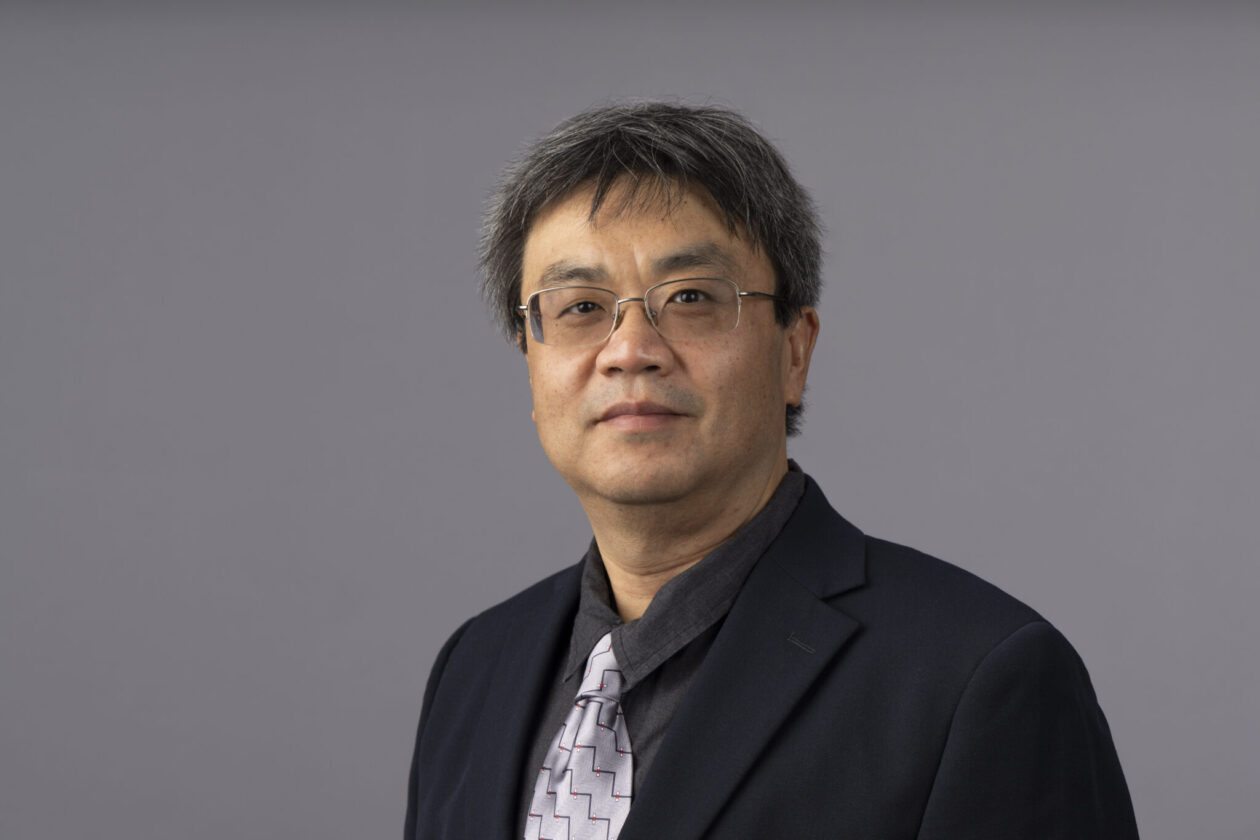
Dr. Feng Zhao. Photo by Michael Pierce/Missouri S&T
Dr. Feng Zhao joined Missouri S&T as a professor of electrical and computer engineering in August 2025. An expert in semiconductor engineering, Zhao shares his insights in this Q&A in commemoration of National Engineers Week 2026.
Missouri S&T recently launched a bachelor’s degree program in semiconductor engineering. What excites you most about helping develop this new program?
With more than 25 years of experience in the semiconductor field, in both industry and academia, I am thrilled to finally see a dedicated bachelor’s degree program in semiconductor engineering. This opportunity is one of the main reasons I chose to join Missouri S&T. I am excited to help build this new program and to contribute to designing its curriculum from the ground up, helping train the highly skilled workforce our country urgently needs while addressing the rapidly growing semiconductor talent shortage.
This program represents an important step toward strengthening domestic semiconductor manufacturing and ensuring a resilient, innovative future. I am also excited for our new cleanroom facility, which will support not only hands‑on undergraduate education but also expand research capabilities across campus. It will significantly enhance research in nanotechnology, microelectronics and materials science, including my own research work.
Your research includes sensors, computer chips and microscale mechanical systems. How do these technologies affect everyday life?
My research in sensors focuses on creating robust, biocompatible neuro-interfaces for a wide range of applications, including in-vivo neurotransmitter monitoring, automated blood sampling and precise drug delivery. My research in computer chips, particularly those built from biodegradable and environmentally friendly natural organic materials, enables neuromorphic systems with exceptional energy efficiency and sustainability for “in-memory” computing and AI. In addition, my research in microelectromechanical systems advances the performance of precision robotics and automation in harsh or demanding environments. Together, these efforts contribute far beyond improving individual devices — they help shape how we live, work, stay healthy and protect our environment.
What aspects of semiconductor-related research do you find most fascinating?
Semiconductor-related research is fascinating because it sits at the intersection of materials science, chemical engineering, electrical engineering, computer engineering, physics, and increasingly biology, driving the next generation of electronics with profound impact on society, human health and environmental sustainability.
We are now engineering devices at scales that push the limits of physics and extend far beyond Moore’s Law. Researchers are exploring new material systems, such as wide-bandgap semiconductors, organic and polymer semiconductors, and other emerging classes, to unlock unique “superpowers,” including higher speed, lower power consumption, mechanical flexibility and recyclability. At the same time, advances in brain-inspired neuromorphic architectures bring us closer to smart and more powerful computing systems that can learn and adapt while consuming orders of magnitude less energy, a capability essential for future AI and Internet of Things technologies.
What advice would you give students interested in pursuing careers in semiconductor engineering?
Semiconductor engineering is one of the most exciting, impactful and fast‑growing fields today, driving advances in everything from AI and renewable energy to national security and consumer electronics, and it offers an extraordinary career path. With our semiconductor engineering curriculum spanning materials science, electrical engineering and chemical engineering, I encourage students to build strong fundamentals in circuits and electronics, solid-state physics, materials science, chemistry and thermodynamics, and core computer engineering concepts.
A solid foundation will make advanced coursework and hands-on laboratory experiences far more rewarding. Students should also take full advantage of our curriculum to learn tools and skills that industry values, including device design and process software, as well as cleanroom laboratory courses where they will learn to operate semiconductor process tools and to build, test and characterize real devices. This kind of hands‑on experience is both invaluable and highly attractive to employers. Semiconductor technology evolves rapidly, so stay curious, keep learning and embrace the excitement of this field that is constantly redefining the future.


Leave a Reply