A cleaner coat: S&T students launch paint sustainability startup ‘MicroHues’
Posted by Kaitlin Brothers
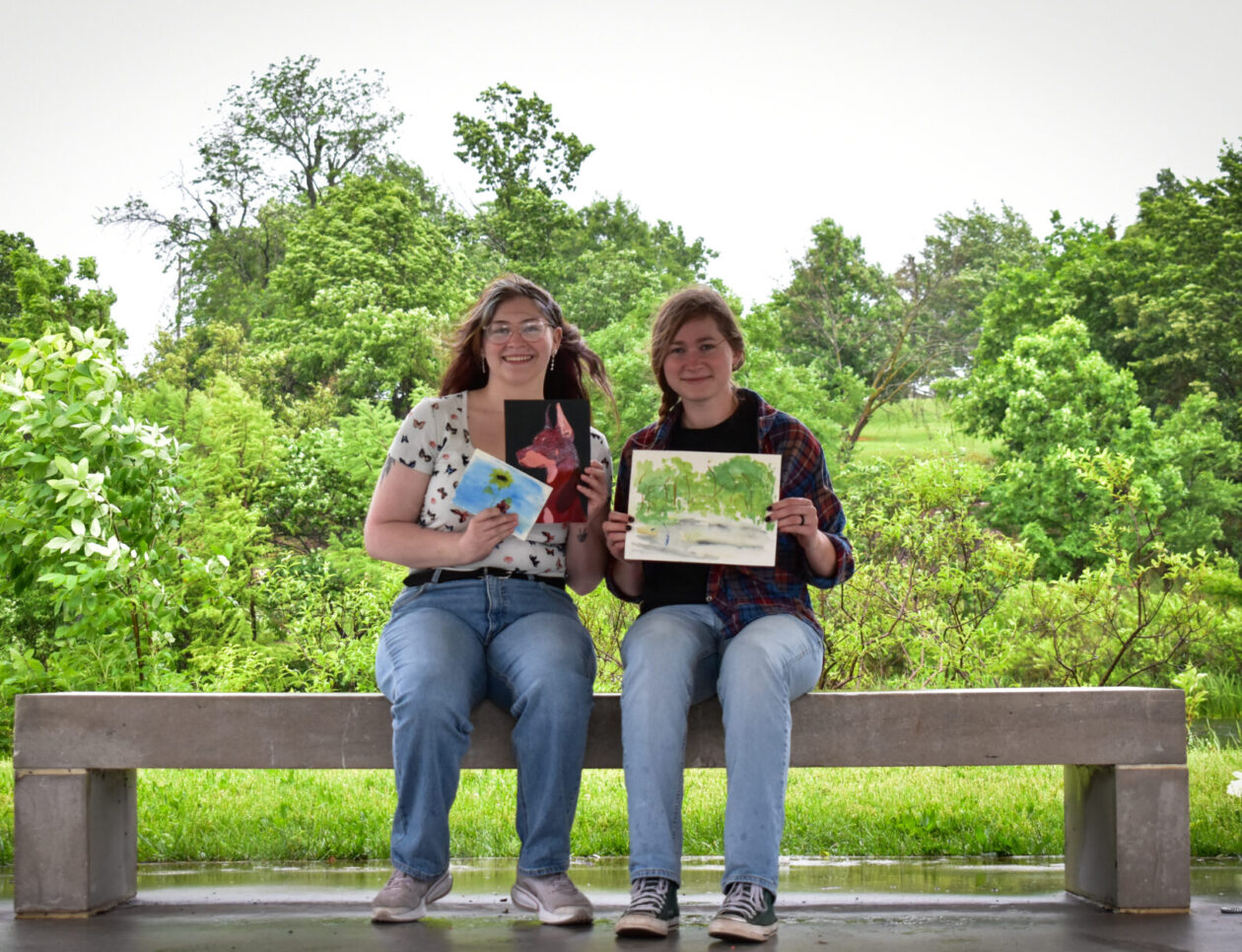
Karly Butts (left) and Adrianna Sasser (right) turned a class project into a startup business called “MicroHues.” Photo submitted by Sasser.
Adrianna Sasser and Karly Butts didn’t expect a class project at Missouri S&T to turn into a business. Now, the two are developing sustainable paints through their startup, MicroHues.
“MicroHues: Sustainable Micro Algae Water-based Paints” is paint that turns microalgae and cyanobacteria into bright, natural pigments that could replace acrylic paints in a more sustainable way.
Sasser is a biological sciences alumna who graduated in May, while Butts is a biological sciences senior.
“We’re both artists. Art and science go hand in hand,” says Sasser. “I work with algae, and she works in freshwater ecology. Blending our expertise from those two areas works. We want to help decrease pollution in waterways, and I really want to grow algae. So, we asked: how can we do that?”
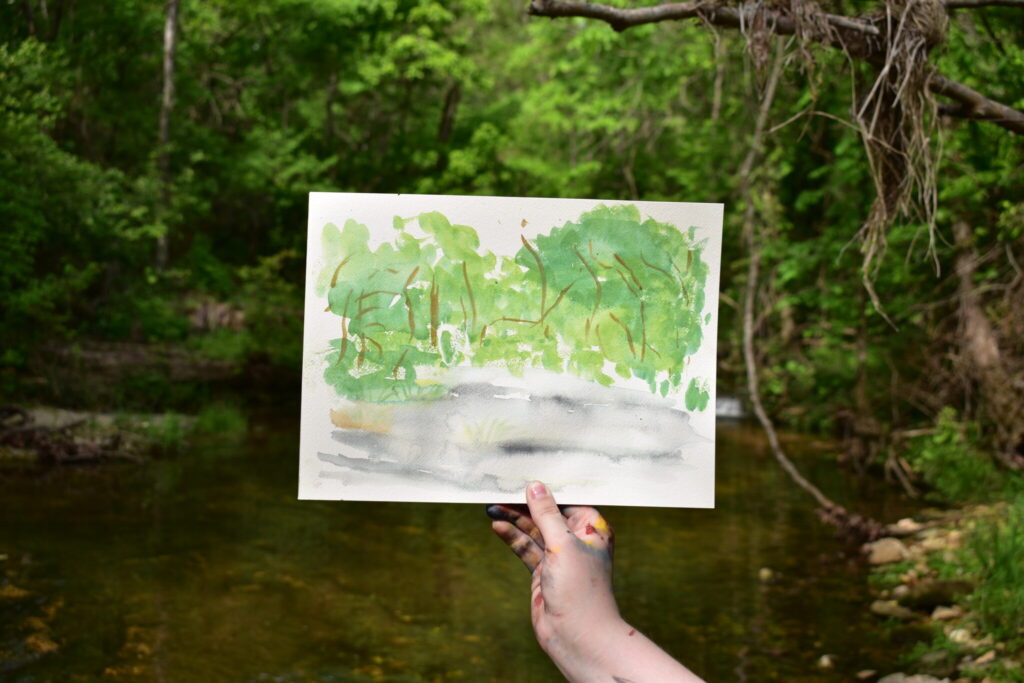
Not only did the pair win first place in S&T’s Startup Challenge in December 2025 with a $4,000 prize and receive additional funding through the university’s Business Accelerator Program pitch competition, they also won a cash prize from Venture Well in March to continue to develop their paints.
A blank canvas
When Sasser and Butts were classmates in a biology and innovation design course, they never expected a homework assignment to become a startup. In the class, students develop a project from concept to potential business through market research, interviews and feasibility analysis.
“We figured, why not? We’re doing all this work. Why not take it somewhere?” Sasser says. “When the class first started, she wasn’t sure if we were supposed to make a real business, but then making the first prototype was actually her idea.”
As artists, the project is personal to them. Butts has always loved art. She says her grandmother was a great artist, and they painted together. Her grandmother passed away in January.
“She loved colors, and she loved people and the earth,” Butts says. “I believe in this so much because of the ideas my grandma instilled in me. I know she would have loved something like this.”
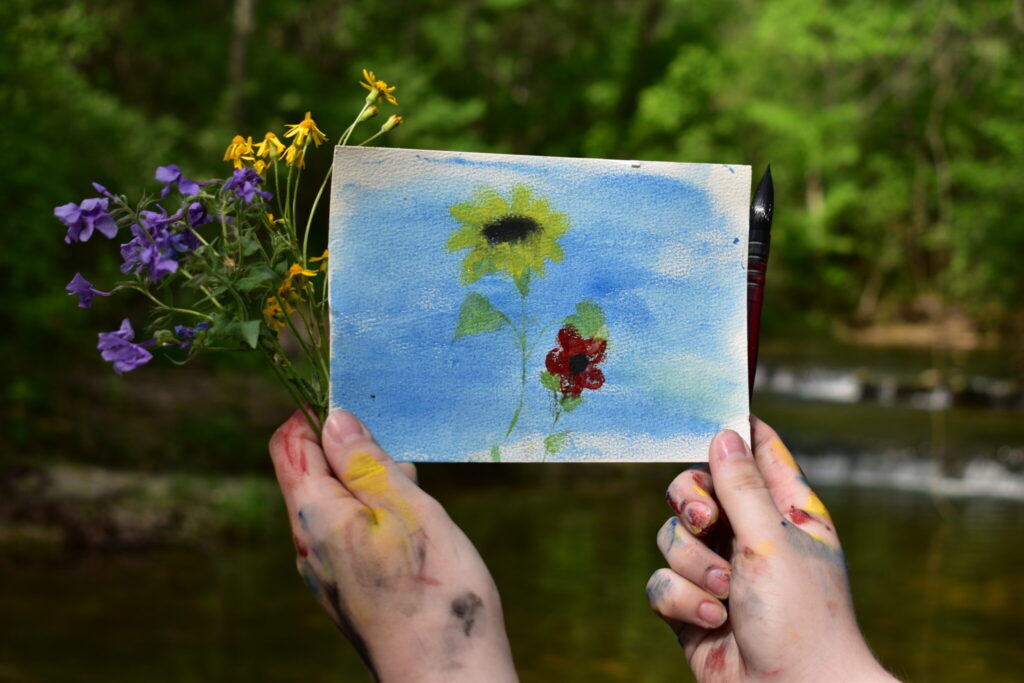
About halfway through the semester, the classmates committed to creating MicroHues and began building a network of artists, industry contacts and experts.
As they conducted interviews and customer research, they found interest from artists working in various media, including watercolor, acrylic and gouache painting.
Many people expressed concerns about the environmental impact of traditional paints, reinforcing the demand for a sustainable alternative — especially as studies estimate that paint accounts for around 35% of primary microplastics entering the ocean.
“The reception to our idea was just overwhelmingly positive,” Sasser says. “We built this great network very quickly.”
Painting a greener future
Both Sasser and Butts have backgrounds in art and science, which helped inspire the idea for MicroHues.
Sasser works with algae, while Butts studies freshwater ecology, so together they wanted to find a way to reduce pollution in waterways using their scientific expertise. Their interest in biodegradable materials and naturally derived pigments led them to explore whether pigments already used in food-safe dyes and vitamins could also serve as sustainable alternatives in paint products.
“We just got more and more excited the more we worked with it,” Sasser says. “We started making a prototype, then it actually worked.”
Sustainability is very important to Sasser and Butts, along with safety.
“Those are our biggest priorities, because we’d like to see more companies create a circular manufacturing process where waste inputs from one company are used by another, instead of ending up in the environment and leaving that responsibility to consumers,” Sasser says.
Building a business
After they won first place in S&T’s Startup Challenge with $4,000, Sasser and Butts knew it was a good idea to keep pushing the idea forward. They also received $1,000 through S&T’s Business Accelerator Program pitch competition. Recently, they won $5,000 from Venture Well, a national grant program.
Through Venture Well, the two also went to an entrepreneurial workshop in Boston in April.
“We were trying to think outside the box with every aspect of our business as much as possible. It was awesome being kind of steeped in that environment with all the other teams doing the same,” Sasser says.
Sasser attended a leadership conference in Boston about 10 years ago as a high school student, where she heard from science entrepreneurs. She found it meaningful to return to Boston years later in a similar setting.
“I had kind of given up on entrepreneurship when I started S&T, so I can’t applaud that class enough for giving meaning to my daily life on campus,” Sasser says. “Just having that real-life application in a class was incredible and very inspiring.”
Dr. Julie Semon, associate professor of biological sciences, teaches the biological design and innovation class where MicroHues was born.
“The hands-on, real-life experiences with my students caused me to think differently about taking their learning outside of the classroom,” Semon says.
Butts says thanks to Semon, the idea was able to branch outside of the classroom into a real business.
“Dr. Semon was our first big supporter. She’s amazing,” Butts says. “Even now, she supports us.”
The two turned in another grant application to Venture Well for the second round of funds for $20,000, so they hope to receive that as well as taking on early investors to start a pilot production of their paint sets. They are currently in the research and development (R&D) process.
“We’ll continue to be in R&D for a while, but we’re not going to let that get in the way of trying to get pilot sets out for artists to test and give us feedback,” Sasser says. “That way, we can make sure we’re developing this with them, since they are going to be the ones that are going to be using this paint.”
Making new connections
In May, Sasser and Butts were invited guest speakers at the monthly Rolla LOOP meeting. Sasser spoke on behalf of both founders.
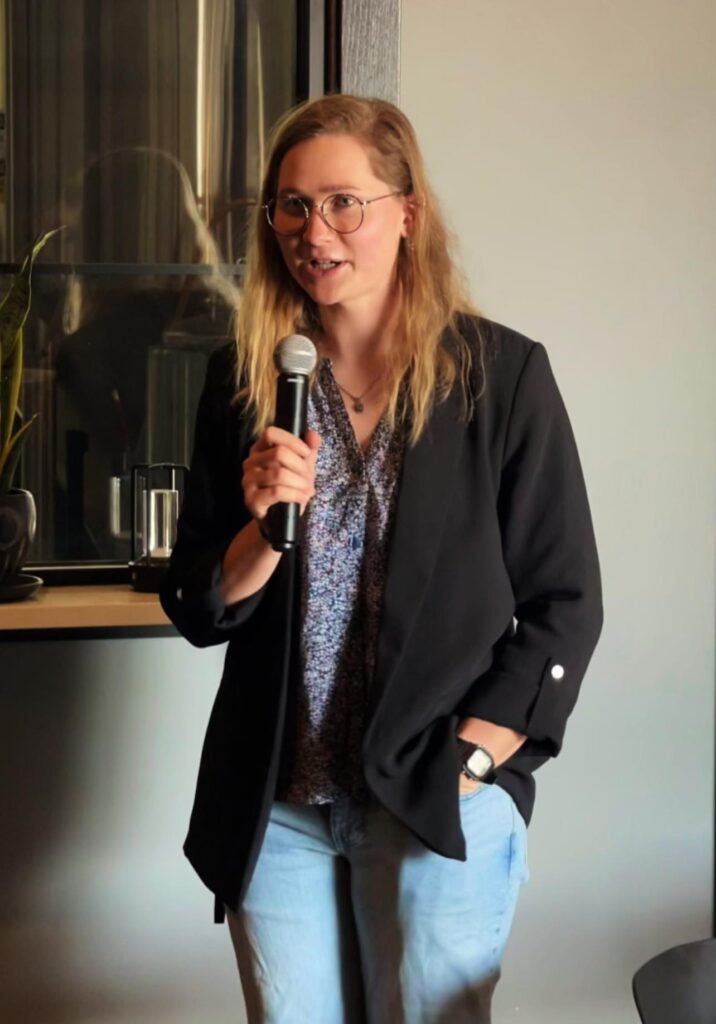
The Rolla LOOP is a monthly gathering for entrepreneurs and community members to connect and collaborate. It’s supported by S&T’s Kummer College, and led by Dr. Rachel Kohman, assistant dean of entrepreneurship education at S&T, and Rachel Jung, S&T alumna and director of project management at Brewer Science.
Sasser spoke about MicroHues’ early success and the company’s environmental goals. Kohman said Sasser also made new connections during the event that could help support future business development.
“There was a LOOP guest who has connections with a bioreactor, and another LOOP attendee has connections with licensing and regulatory professionals that can assist them,” Kohman says.
The next brushstroke
Even as Sasser starts her career at the Missouri Wildflowers Nursery and Butts pursues veterinary school, they believe the company has strong long-term potential as they continue to work on it.
They want to start small with plans for steady growth, and hope to eventually make an impact and see MicroHues recognized as a household name in sustainable paint.
“Doing this is obviously going to be very hard, but it’s something that I believe in and that I want to see succeed,” Butts says. “I’m willing to do both, especially because of how microplastics affect animals and their environment. That is something I believe in.”

Posted by Kaitlin Brothers
 Sports Headlines
- 2026 Miner Athletic Hall of Fame Induction Class Announced
- S&T Men's Basketball Earns Team Academic Excellence Awards; Five Miners Named to Honors Court
- S&T Men's Volleyball Earn AVCA Team Academic Award
- Ten Miners and Both Teams Earn USTFCCCA All-Academic; Fraser Named Scholar Athlete of the Year
- S&T Welcomes Ryan Hunt as New Assistant Track & Field Coach
Leave a Reply