Manufacturing for the future: S&T researcher advances smarter, more sustainable production
Posted by Kaitlin Brothers
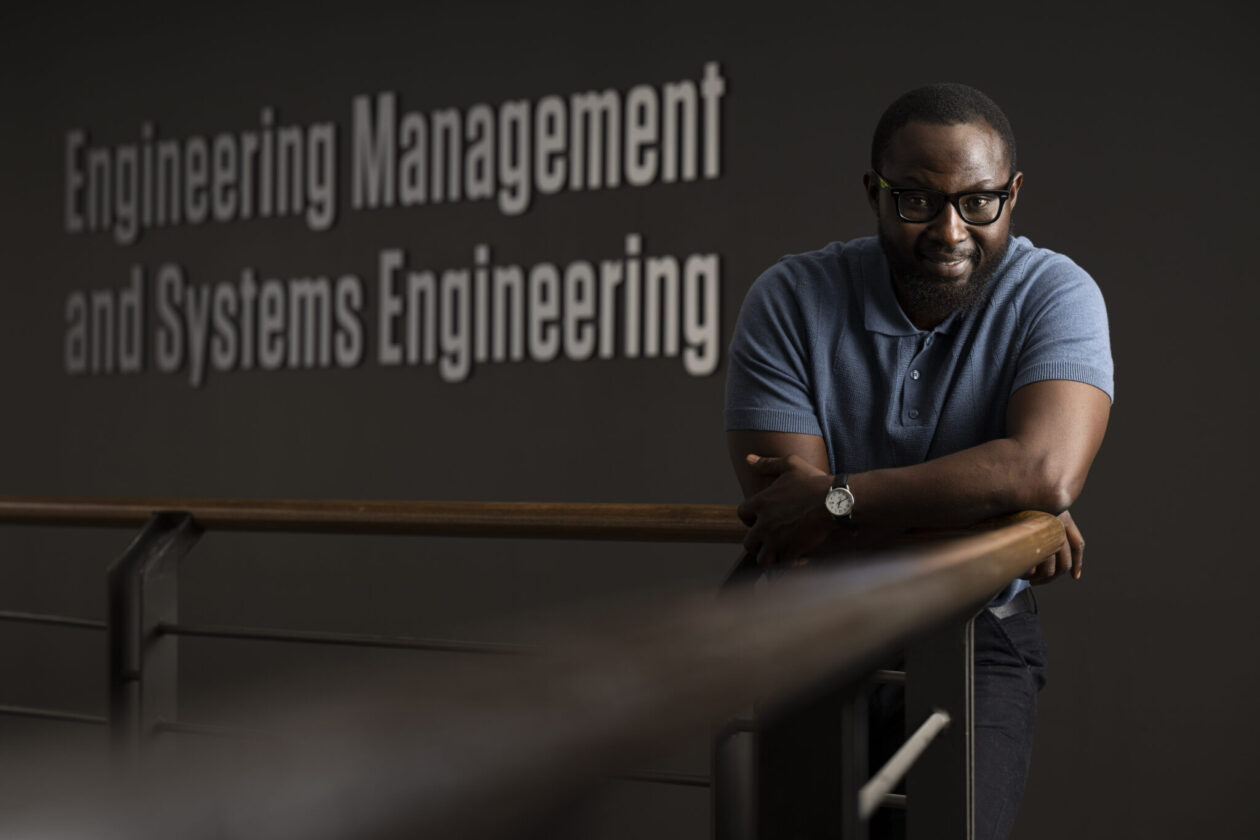
Dr. Joshua Adu Afari recently earned a Ph.D. in engineering management and focused his research on smart remanufacturing. Photo by Blaine Falkena/Missouri S&T.
As industries around the world move toward smarter and more sustainable production methods, a recent Ph.D. graduate at Missouri S&T has developed a new model that could help manufacturers cut costs and reduce carbon emissions without requiring more resources.
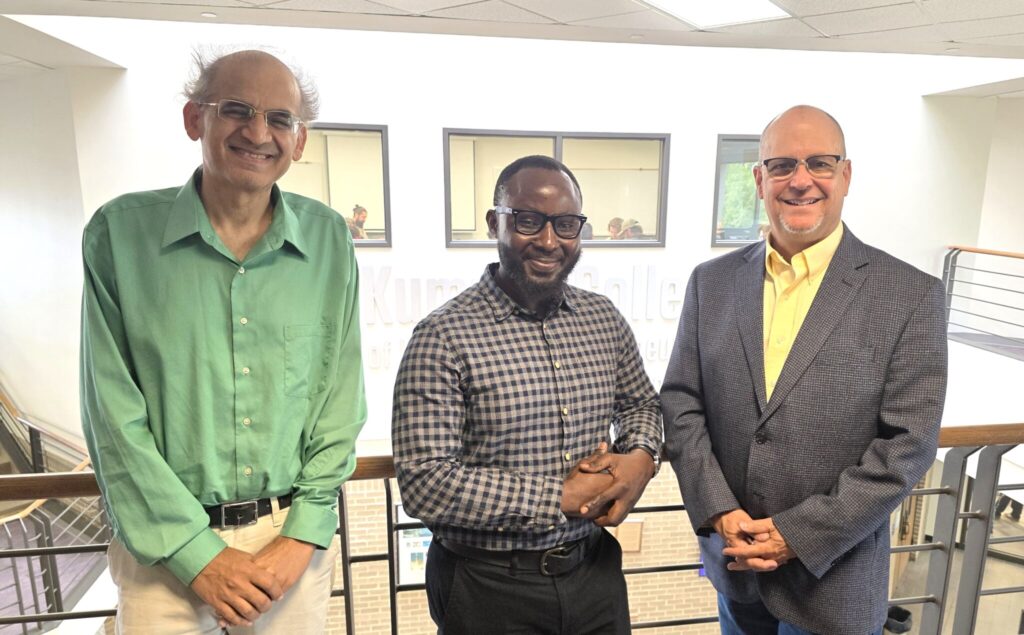
The study, published in Springer Nature and part of a National Science Foundation grant, was conducted by Dr. Joshua Adu Afari, who received a Ph.D. in engineering management in July 2025, along with Dr. Abhijit Gosavi, professor of engineering management; and Dr. Robert Marley, professor emeritus of engineering management.
Afari’s research focused on “remanufacturing,” the process of restoring used products such as machinery parts so they can be used again. Afari said he used a previous model but modified it to not alter the dimensions of the area to lower the material handling costs.
“Reducing the material handling costs will automatically reduce the total cost of production of the product, which will also help consumers,” Afari says.
Marley says the research highlights the broad importance of advanced manufacturing, which is becoming a bigger focus at S&T. He says Afari’s research could help make manufacturing more economically feasible in places throughout Missouri and across America that may have otherwise been impractical.
“When you can reduce costs using an existing facility rather than building new ones, you help keep operations local,” Marley says. “Joshua did a great job of showing how that can be achieved.”
Gosavi says the project’s modeling approach also provides a good way for researchers and manufacturers to test new ideas before trying them in real-world settings.
“When we talk about a model, we mean something abstract while the system is the real-world version,” Gosavi says. “Think of it like a computer program: you can tinker with it, make changes and experiment without disrupting the actual production process.”
The United States has traditionally had a “one-ended economy,” Marley says, where our country manufactures products, they get used and often scrapped or sent to landfills. Only a small portion is returned for remanufacturing and much of that is sent internationally for processing.
“Joshua’s work represents an important step toward making this process more economically feasible here at home,” Marley says. “It’s about seeing production as a continuous stream, where remanufacturing becomes just as common as building something new. We need to do more of that. With research like this, we’re getting closer.”
Afari’s main goal is to make manufacturing smarter, faster and more responsible for future generations.
“It’s about saving time, reducing waste and making products people need, all while protecting the environment and keeping manufacturing strong,” Afari says.

Posted by Kaitlin Brothers
 Sports Headlines
- Miners Lead Division II with Five At-Large CSC Academic All-Americans; Four from Men's Volleyball
- Miners Swim Earns 26th Consecutive Team Scholar All-America; Six Individuals Also Honored
- Edmonds and Fraser Earn GLVC Scholar-Athlete Honors
- Miners Set School Record with 48 Council of Presidents’ Academic Honors
- S&T Sets New Department Standard for Br. James Gaffney Distinguished Scholar Honorees
Leave a Reply